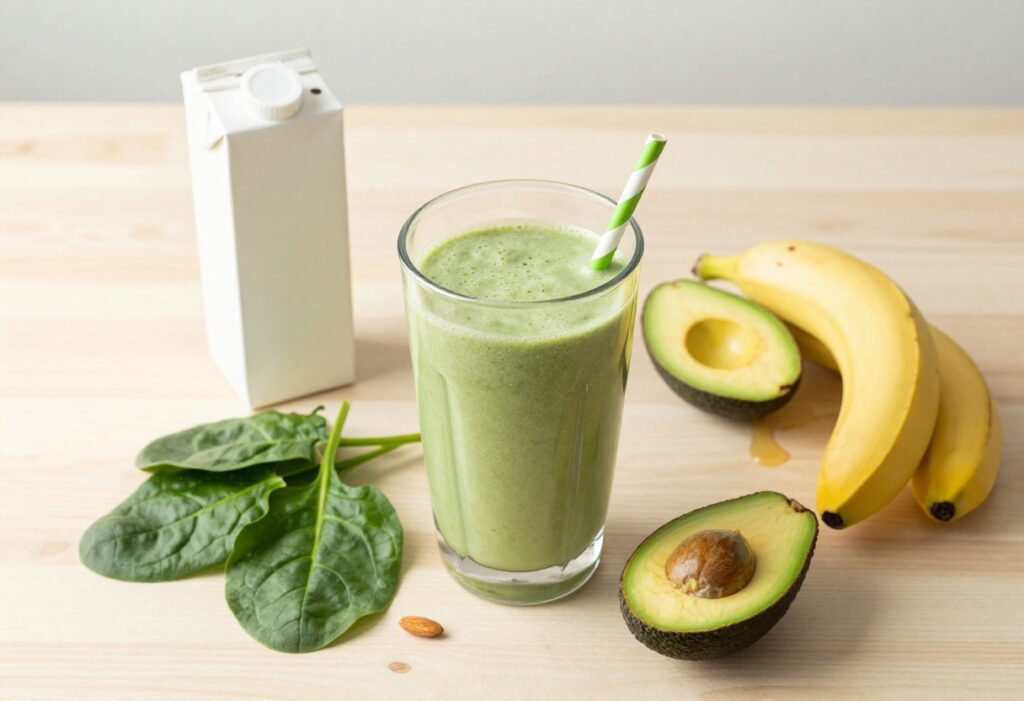
Protein is the building block of life, and getting enough of it each day can transform your energy levels, keep you full longer, and support your fitness goals. But let’s be honest—eating high protein often feels like a chore. Between complicated recipes and expensive ingredients, it’s easy to fall back on carb-heavy convenience foods.
That’s why we created this high protein meal plan: to make fueling your day simple, delicious, and totally doable. This plan is designed for real life.
No fancy equipment, no obscure superfoods, and no hours in the kitchen. Just straightforward meals that pack a protein punch—think Greek yogurt, eggs, chicken, beans, and salmon—combined with veggies and healthy fats for balanced nutrition.
Why a High-Protein Diet Fuels Your Day
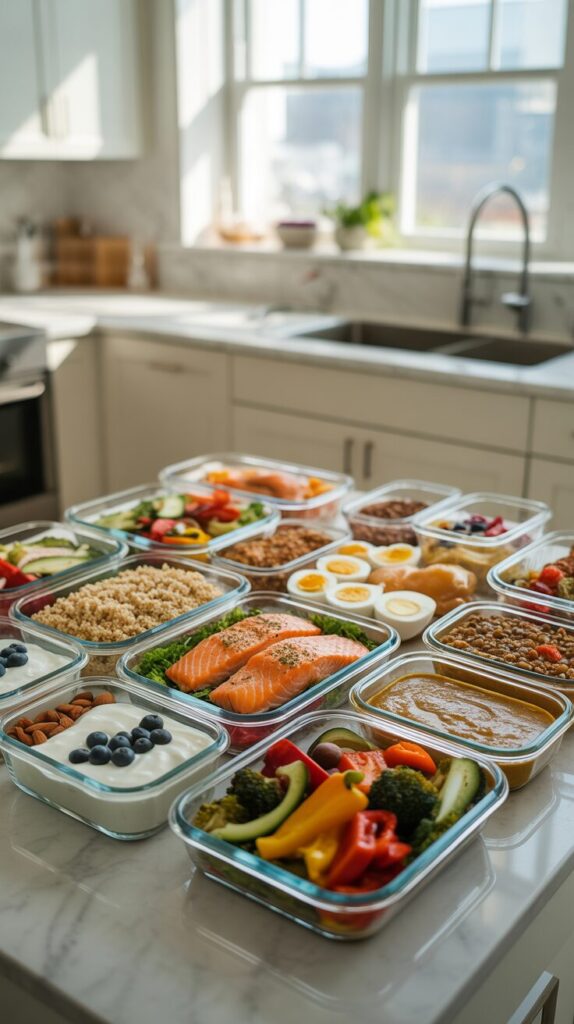
Protein is more than just a buzzword in the health world—it’s a key nutrient that can transform how you feel and function every day. When you prioritize protein, you’re giving your body the building blocks it needs to stay energized, satisfied, and strong.
One of the biggest benefits of a high protein diet is its ability to boost your metabolism. Your body burns more calories digesting and processing protein compared to fats or carbohydrates—a phenomenon called the thermic effect of food. This means that by simply eating enough protein, you’re naturally increasing your energy expenditure.
Protein also keeps you feeling full longer. It reduces levels of the hunger hormone ghrelin and increases satiety hormones like peptide YY. This makes it easier to avoid mindless snacking and stay on track with your nutrition goals, whether you’re trying to lose weight or simply maintain a balanced diet.
Beyond weight management, protein plays a critical role in preserving and building muscle mass. As we age, muscle naturally declines, but a protein-rich diet combined with regular activity can slow this process. More muscle means a higher resting metabolism, better strength, and improved daily function.
For busy individuals, high protein meals provide steady energy without the crashes that come from carb-heavy options. Protein stabilizes blood sugar levels, preventing the mid-afternoon slump and helping you stay focused and productive.
In short, a high protein diet isn’t just about building muscle—it’s about fueling your day with sustained energy, better appetite control, and a metabolism that works for you. Let’s look at how much you need and how to get it.
Key Benefits at a Glance
- Boosts metabolism through the thermic effect of food
- Keeps you fuller for longer, reducing cravings
- Helps maintain and build lean muscle mass
- Supports weight management by controlling appetite
- Provides stable energy without blood sugar spikes
Your Easy High Protein Meal Plan: A Week at a Glance
This simple weekly plan uses common ingredients and straightforward recipes to hit your protein goals without spending hours in the kitchen. Each day includes breakfast, lunch, dinner, and a snack with approximate protein counts to keep you on track.
Weekly High Protein Meal Plan
| Day | Breakfast (20-30g) | Lunch (30-40g) | Dinner (35-50g) | Snack (10-20g) |
| Monday | Greek yogurt parfait with berries and almonds | Grilled chicken salad with chickpeas | Salmon with quinoa and broccoli | Cottage cheese with sliced peaches |
| Tuesday | Scrambled eggs with spinach and whole-wheat toast | Turkey and avocado wrap | Lean beef stir-fry with bell peppers and brown rice | Protein shake with almond milk |
| Wednesday | Overnight oats with protein powder and chia seeds | Tuna salad lettuce wraps | Baked chicken thighs with sweet potato and green beans | Hard-boiled eggs (2) |
| Thursday | Smoothie with whey protein, banana, and peanut butter | Quinoa bowl with black beans, corn, and salsa | Pork tenderloin with roasted Brussels sprouts | Greek yogurt with a drizzle of honey |
| Friday | Egg muffins with cheese and turkey sausage | Leftover pork tenderloin with mixed greens | Shrimp skewers with couscous and asparagus | Edamame pods with sea salt |
| Saturday | Protein pancakes with sugar-free syrup | Grilled chicken Caesar salad (light dressing) | Lean ground turkey chili with kidney beans | String cheese and almonds |
| Sunday | Frittata with veggies and feta cheese | Leftover chili | Baked cod with lemon and roasted carrots | Roasted chickpeas |
High Protein Breakfast Ideas to Start Strong
A high-protein breakfast sets the tone for your entire day, keeping you full, focused, and energized until lunch. The key is to choose options that are quick to prepare (under 10 minutes) and packed with quality protein from sources like eggs, yogurt, or protein powder. Here are three simple, delicious breakfasts that deliver a protein punch without taking up your morning.
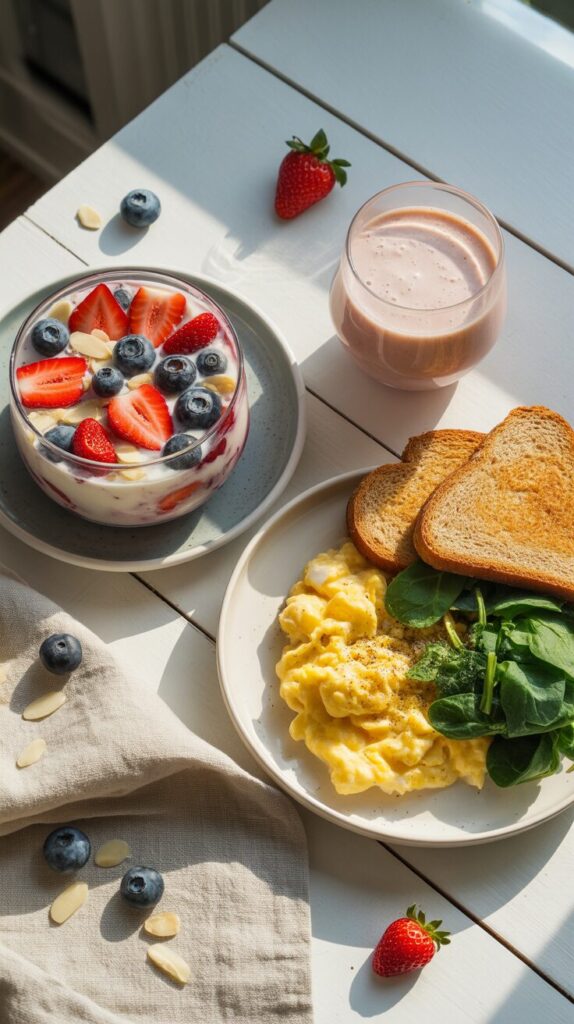
Greek Yogurt Parfait
This no-cook breakfast comes together in minutes. Layer 1 cup of plain Greek yogurt (about 20g protein) with a handful of berries and a tablespoon of chopped nuts or seeds. For extra protein, stir in a scoop of unflavored protein powder or add a dollop of nut butter.
The yogurt provides probiotics, while berries add fiber and antioxidants. It’s creamy, satisfying, and easy to take on the go.
Egg and Veggie Scramble
Eggs are a breakfast staple for a reason: two large eggs offer 12g of protein. Whisk them with a splash of milk, then scramble in a non-stick pan with pre-chopped veggies like spinach, bell peppers, or mushrooms. For a protein boost, add a handful of shredded cheese or leftover cooked chicken.
Serve with a slice of whole-grain toast for fiber. Total time: 5–7 minutes.
Protein Smoothie
When you’re really short on time, a smoothie is your best friend. Blend 1 scoop of protein powder (20–25g protein), 1 cup of unsweetened almond milk, a handful of spinach, half a banana, and a tablespoon of chia seeds. This drink is portable, customizable, and hides greens effortlessly.
For a thicker texture, add ice or a few cubes of frozen fruit.
Simple High Protein Lunches for Busy Days
Lunch can be a struggle when you’re busy, but these three high protein ideas come together quickly or can be prepped ahead. Each one is balanced with veggies and healthy fats to keep you full and focused.
Chicken and Quinoa Bowl
Cook a batch of quinoa and grilled chicken at the start of the week. For each bowl, combine 4 ounces of chicken, 1/2 cup quinoa, and a handful of mixed greens. Add cherry tomatoes, cucumber, and a drizzle of olive oil and lemon juice.
This bowl packs about 35 grams of protein and takes 5 minutes to assemble.
Tuna Salad Lettuce Wraps
Mix one can of tuna (drained) with 1 tablespoon of Greek yogurt or avocado, plus diced celery and onion. Spoon the mixture into large lettuce leaves like romaine or butter lettuce. Each wrap provides roughly 25 grams of protein and is ready in under 10 minutes.
Lentil Soup
Make a big pot of lentil soup on the weekend. Sauté onions, carrots, and garlic, then add red lentils, vegetable broth, and cumin. Simmer until tender.
One cup of this soup delivers about 18 grams of protein and fiber, perfect for a quick reheat.
Pair any of these lunches with a piece of fruit or a handful of nuts for extra staying power. They’re all designed to use common ingredients and minimal prep time.
Easy High Protein Dinners the Whole Family Will Love
Dinner can be the hardest meal to fit in when you’re busy, but these three high-protein dinners are designed to be simple, family-friendly, and made with ingredients you can find at any grocery store. Each recipe uses one pan or one pot for easy cleanup and packs at least 30 grams of protein per serving.
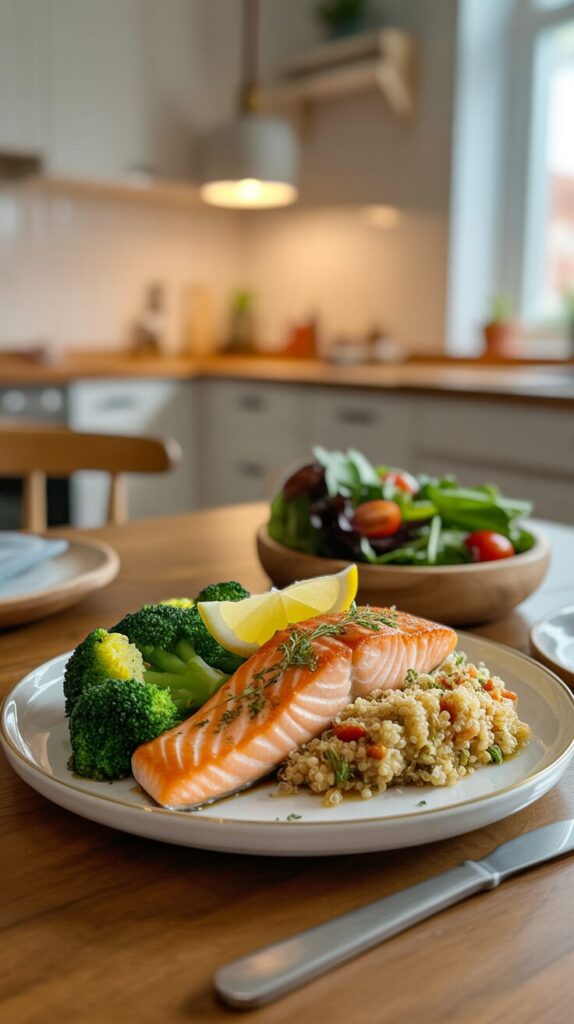
Sheet Pan Salmon and Broccoli
Preheat your oven to 400°F. On a large sheet pan, place 4 salmon fillets (about 6 oz each) and 4 cups of broccoli florets. Drizzle with olive oil, sprinkle with salt, pepper, and garlic powder.
Roast for 12–15 minutes, until salmon flakes easily and broccoli is tender. Serve with lemon wedges. Each serving provides about 35g of protein.
Lean Beef Stir-Fry
In a large skillet or wok, cook 1 lb of lean ground beef (93% lean) over medium-high heat until browned. Add a bag of frozen stir-fry vegetables (about 3 cups) and cook for 5 minutes. Stir in 3 tablespoons of low-sodium soy sauce and 1 tablespoon of sesame oil.
Serve over cooked brown rice or cauliflower rice. Each serving (without rice) offers roughly 30g of protein.
Vegetarian Chili with Beans
In a large pot, sauté one diced onion and two minced garlic cloves in olive oil. Add two cans of diced tomatoes, one can each of black beans, kidney beans, and pinto beans (rinsed), plus 2 tablespoons of chili powder. Simmer for 20 minutes.
Serve with a dollop of Greek yogurt or shredded cheese. Each serving contains about 25g of protein from the beans alone.
High Protein Snacks to Keep You Going
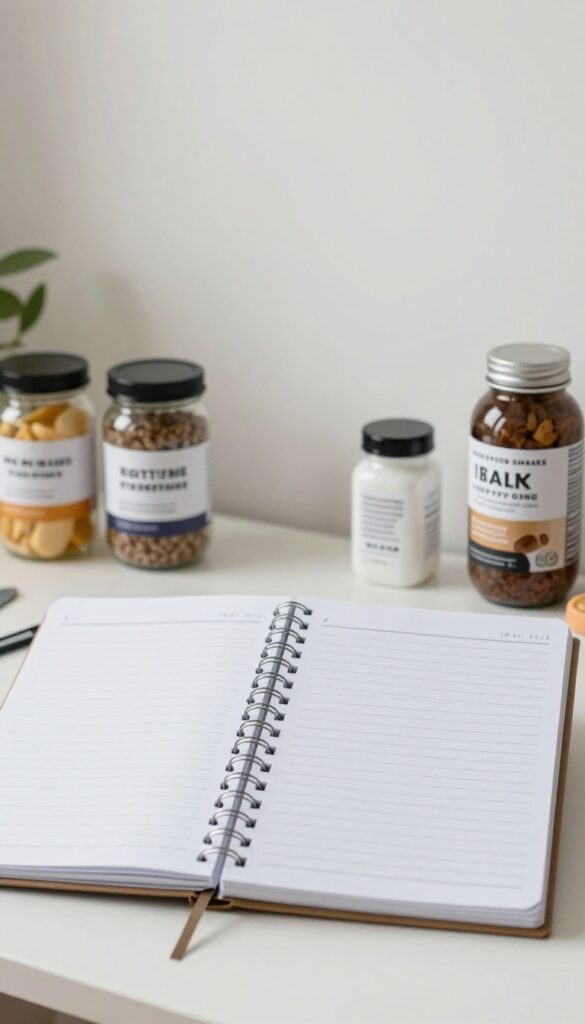
Snacking is a great way to boost your protein intake between meals, especially when you’re on the go. The key is to choose options that are portable, require little to no prep, and pack a solid protein punch. Here are seven easy snack ideas to keep your energy steady throughout the day.
- Greek yogurt cup (15-20g protein per serving) – Choose plain or vanilla, and pair with a handful of berries for extra flavor.
- Beef or turkey jerky (10-15g protein per ounce) – Opt for low-sodium varieties to keep sodium in check.
- Cottage cheese single-serve cup (12-15g protein per half cup) – Add some black pepper or a drizzle of honey for variety.
- Hard-boiled eggs (6g protein each) – Boil a batch on Sunday and grab two for a quick snack.
- Protein shake or ready-to-drink protein beverage (20-30g protein per bottle) – Keep one in your bag for a post-workout or mid-afternoon boost.
- Edamame pods (18g protein per cup, shelled) – Frozen edamame can be microwaved in minutes; sprinkle with sea salt.
- String cheese (8g protein per stick) – Pair with a small apple or a handful of almonds for a balanced mini-meal.
Tips for Sticking to Your High Protein Meal Plan
Consistency is key when following a high protein meal plan. Here are practical strategies to help you stay on track, whether you’re meal prepping, dining out, or adjusting portions for your specific goals.
Master Meal Prep for the Week
Set aside a couple of hours each week to prep ingredients. Cook a large batch of chicken breast, hard-boil eggs, portion out Greek yogurt, and chop veggies. Store them in clear containers so you can grab and go.
This reduces decision fatigue and keeps you from reaching for low-protein options when you’re short on time.
Quick meal prep ideas
- Grill 4-6 chicken breasts at once; slice and store for salads, wraps, or bowls.
- Hard-boil a dozen eggs for snacks or to add to meals.
- Portion cottage cheese or Greek yogurt into single servings.
- Pre-wash and chop bell peppers, cucumbers, and cherry tomatoes.
Navigate Eating Out Without Derailing
Restaurant meals can be high in carbs and fats but low in protein. Look for grilled or baked protein options, ask for sauces on the side, and double up on vegetables. Don’t be afraid to request substitutions like extra chicken or a side of eggs.
Smart choices when dining out
- Order a grilled chicken salad with vinaigrette instead of creamy dressing.
- Choose a bunless burger with a side of steamed broccoli.
- Ask for a double portion of meat or fish (often available for a small upcharge).
- Skip the bread basket and order a protein-rich appetizer like shrimp cocktail.
Adjust Portions to Match Your Goals
Your protein needs depend on your activity level and whether you want to lose, maintain, or gain weight. A general guideline is 0.7-1.0 grams of protein per pound of body weight. Use your hand as a rough measure: a palm-sized portion of meat, fish, or tofu is about 20-25 grams of protein.
Adjust the number of palms per meal based on your target.
Portion guide by goal
| Goal | Protein per meal (approx.) | Example serving |
| Weight loss | 20-30g | 1 palm of chicken + 1 egg |
| Maintenance | 30-40g | 1.5 palms of salmon |
| Muscle gain | 40-50g | 2 palms of beef or 1 scoop protein shake + meal |
Remember, this plan is flexible. Listen to your hunger cues and adjust as needed. The most important thing is to find a routine that feels sustainable for you.
FAQ
How much protein do I need per day?
The general recommendation is 0.8 grams per kilogram of body weight, but for active individuals or those looking to build muscle, 1.2-2.0 grams per kilogram is often recommended. This meal plan provides around 100-120 grams daily, which suits most moderately active adults.
Can I follow this meal plan if I’m vegetarian?
Absolutely! Many of the meals are already vegetarian or can be easily adapted. Swap chicken for tofu or tempeh, use beans or lentils in place of meat, and choose dairy or plant-based protein sources like Greek yogurt, cottage cheese, and edamame.
Will this meal plan help me lose weight?
Yes, because high protein diets increase satiety and boost metabolism slightly. However, weight loss ultimately depends on a calorie deficit. This plan is designed to be nutritious and filling, which can help you eat fewer calories overall without feeling deprived.
Can I meal prep these recipes?
Definitely! Most recipes are meal-prep friendly. Cook grains and proteins in bulk, chop veggies ahead, and portion out snacks.
The sheet pan dinners and soups reheat well. Store components separately and assemble when ready to eat.
Conclusion
Eating high protein doesn’t have to be complicated or time-consuming. With this meal plan, you have a week’s worth of simple, tasty recipes that keep you fueled from morning to night. The key is to find what works for you—maybe you love the smoothie breakfasts or the sheet pan dinners—and build from there.
Remember, consistency matters more than perfection.
Start with one day, then try a full week. Your body will thank you with steady energy, fewer cravings, and better results. Here’s to easy daily fuel!

Dr. Pallab Kishore, MS in Orthodontics and owner of Orthodontic Braces Care, shares expert tips on braces, aligners, and oral health from 10+ years of experience.