
A vision board isn't just a collage of pretty pictures—it's a tool to reshape your mindset and prioritize self-care. When you intentionally select images and words that represent calm, growth, or joy, you're programming your brain to focus on what truly matters.
These 15 ideas go beyond the typical board, turning visioning into a daily practice that refreshes your perspective and energy. Whether you need motivation, boundaries, or a mental declutter, there's a board here to meet you where you are.
Pick one that resonates, create it with intention, and let it guide your fresh start.
1. Create a Digital Vision Board for Morning Motivation

Your phone is probably the first thing you look at in the morning. Why not make that moment intentional? A digital vision board turns your screen into a daily reminder of what you're working toward, without any extra clutter.
Use a free app like Canva or Pinterest to design a digital board with affirmations and images that inspire your ideal day. Set it as your phone wallpaper or screensaver for a daily dose of intention.
Pick A Theme That Energizes You
Instead of throwing random images together, choose a specific focus—like calm mornings, career growth, or self-love. This keeps your board cohesive and powerful.
Add Affirmations That Stick
Include short, positive phrases like "I start my day with peace" or "I am capable of great things. " Seeing them repeatedly rewires your mindset over time.
Refresh It Seasonally
Your goals and mood change, so update your board every few months. A fresh visual keeps the practice exciting and aligned with where you are now.
2. Design a Gratitude Collage to Shift Your Focus
Gratitude is a powerful reset button for your mindset. Instead of chasing what you don't have, a gratitude collage trains your brain to notice the good that's already there. It's a simple, hands-on way to start each day with appreciation rather than anxiety.
Choose Your Gratitude Triggers
Grab magazines, old photos, or print images that represent people you love, places that calm you, and moments that made you smile. Words also work—think "health, " "home, " "laughter. " Pick at least five to ten items that genuinely spark warmth.
Arrange With Intention
Lay out your cutouts on a small corkboard or piece of cardstock. Don't overthink the layout—let your eye guide you. Group related items or create a flow that feels uplifting.
The goal is a visual reminder of abundance, not perfection.
Place It In Your Morning Path
Hang your collage where you'll see it first thing: beside your bathroom mirror, on your nightstand, or near your coffee maker. Spend ten seconds each morning taking it in. Over time, this small habit rewires your brain toward gratitude.
3. Build a 'Feel-Good' Board with Mood-Boosting Imagery
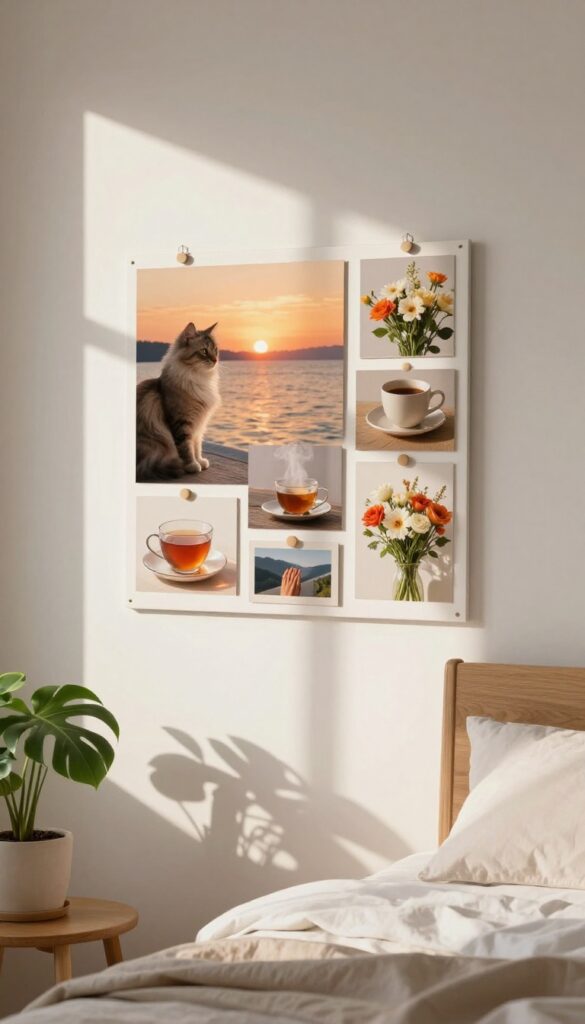
Not every vision board needs to be about goals and achievements. Sometimes, the best way to reset your mindset is to focus purely on how you want to feel. A feel-good board is exactly that—a collection of images that spark joy, comfort, and positivity without any pressure to perform.
Think of it as a visual mood booster you can glance at whenever you need a lift. Instead of pinning career milestones or fitness targets, you're curating emotions. Sunrises, cozy reading nooks, your favorite hobby in action—anything that makes you smile belongs here.
This board is all about emotional self-care. By surrounding yourself with imagery that evokes happiness and calm, you train your brain to access those feelings more easily. It's a gentle reminder that you deserve moments of peace and delight, no strings attached.
What To Include
Focus on visuals that trigger positive emotions. Think warm sunsets, fluffy pets, cups of tea, blooming flowers, or a hammock by the beach. Also add quotes that feel uplifting—short phrases like 'breathe' or 'this is your moment' work well.
The key is to pick images that make you pause and feel good, not ones that remind you of tasks or obligations.
Where To Display It
Place your feel-good board somewhere you'll see it often but not necessarily in your workspace. A bedroom wall, inside a closet door, or even on a bulletin board by your mirror are great spots. The goal is to catch it during moments of transition—like when you're getting dressed or winding down for the night.
How To Refresh It
Your mood and preferences change, so update your board every few months. Swap out images that no longer resonate and add new ones that reflect your current sources of joy. This keeps the board feeling fresh and aligned with what you need emotionally right now.
4. Map Out Your Self-Care Routine Visually
Sometimes the hardest part of self-care is remembering to actually do it. A visual schedule takes the guesswork out of your week, turning good intentions into a colorful, inspiring plan. By mapping out your routine on a vision board, you create a gentle guide that reminds you to pause, breathe, and prioritize yourself.
Start by gathering images and icons that represent your ideal self-care activities—a yoga pose, a steaming cup of tea, a cozy reading corner, a bath with candles. Arrange them on a board in a weekly grid, with each day featuring a small cluster of self-care moments. Use arrows or connecting lines to show flow, like morning stretches leading into a quiet breakfast.
The key is to make it visually appealing and easy to follow, so you actually want to look at it every day.
Pick Your Self-care Icons
Choose simple, recognizable symbols for each activity. A stick figure in a yoga pose, a book icon, a bathtub outline. You can find free icon sets online or draw your own.
Stick to a consistent style—line art, flat colors, or photos—to keep the board cohesive.
Build A Weekly Flow
Lay out your week from Monday to Sunday, leaving space for flexibility. Group activities by time of day: morning rituals, midday breaks, evening wind-downs. Use color coding (blue for relaxation, green for movement) to make the schedule intuitive at a glance.
Add Personal Touches
Include photos of your actual favorite mug, your cozy blanket, or that park bench you love. Personal images make the board feel like your life, not a generic template. You can also add small quotes or affirmations near activities that need a little extra motivation.
5. Make a 'Letting Go' Board for Mental Decluttering
Sometimes the best way to move forward is to first let go. A 'letting go' board is a powerful twist on the traditional vision board—instead of focusing on what you want to attract, you focus on what you need to release. This practice can be deeply cathartic and freeing.
Gather magazines, printouts, or your own drawings that represent the things weighing you down. This could be stress, a bad habit, a toxic relationship, or a limiting belief. Arrange them on a board or a piece of paper.
Once you feel complete, you have a choice: burn it safely, recycle it, or tear it up. The physical act of destruction symbolizes your decision to release those patterns. It's a tangible, emotional reset.
What To Include
Think about the areas of your life that feel heavy. Look for images that represent anxiety, clutter, negative self-talk, or people who drain you. Words like "overwhelm, " "doubt, " or "perfectionism" can be powerful additions.
The goal is to be honest with yourself about what's no longer serving you.
The Ritual Of Release
Find a safe outdoor space or a fireplace. Before you burn or recycle the board, take a moment to acknowledge each item. Say a quiet goodbye or thank you for the lesson.
Then, let it go. Watching the flames or seeing the pieces in the bin can be surprisingly liberating.
After The Board
Once you've released the old, create a simple intention for what you want to invite in. It could be peace, confidence, or just more space. Write it on a sticky note and place it somewhere you'll see daily.
This helps fill the void left by what you've let go.
6. Craft a Vision Board for Your Dream Morning Routine
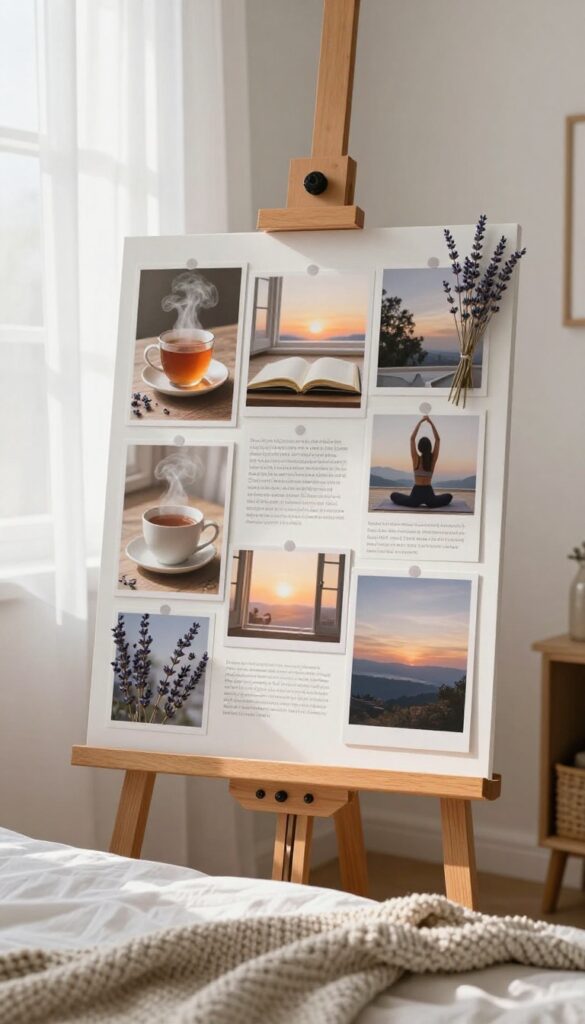
Mornings set the tone for the whole day, but most of us stumble through them on autopilot. A vision board focused on your ideal AM ritual can turn that around. By mapping out each step visually, you create a gentle guide that makes your dream morning feel achievable and real.
Start by listing the elements of your perfect morning—maybe it's waking up without an alarm, sipping tea in silence, or doing a short yoga flow. Then find images that capture those moments: a soft sunrise, a cozy mug, a peaceful stretch. Arrange them in the order you'd experience them, creating a visual story from wake-up to start of day.
What To Include
Think beyond the obvious. Add visuals for the mood you want (calm, energized, focused), the sounds (birds chirping, soft music), and even the smells (fresh coffee, lavender). The more sensory details, the more your brain will buy into the scene.
Where To Place It
Hang your morning routine board somewhere you'll see it first thing—by your bed, on the bathroom mirror, or inside your closet door. That way, it's the last thing you see at night and the first thing you see when you wake, reinforcing the habit.
How To Use It Daily
Don't just look at it—interact. Each morning, glance at the sequence and mentally walk through your routine. Over time, your brain will start to crave those steps, making the vision board a gentle nudge toward consistency.
7. Use a Vision Board to Set Boundaries
Boundaries often feel uncomfortable, but they are essential for protecting your energy and well-being. A vision board dedicated to boundaries can make this abstract concept feel tangible and empowering. By curating images that represent protected time, personal space, and the act of saying no, you create a daily visual reminder that your limits are a form of self-care, not selfishness.
This board helps you stay firm when life tries to push you past your comfort zone.
When you see your boundary board every day, it reinforces your commitment to honoring your own needs. It transforms guilt into confidence and hesitation into clarity. Use it as a tool to check in with yourself: Are you living in alignment with what you've visualized?
Choose Symbols That Speak To You
Pick images that resonate with your personal boundary goals. A locked door, a calm person alone in nature, a calendar with empty blocks, or a simple 'no' sign can all be powerful. The key is to select visuals that trigger a sense of peace and strength, not anxiety.
Place It Where You Need It Most
Put your boundary board in a spot where you'll see it during moments of decision. A desk corner, a bathroom mirror, or even a phone wallpaper works well. This way, before you say yes to something that drains you, the board reminds you to pause and choose yourself.
Update It As You Grow
Your boundaries will evolve, and so should your board. Add new images as you discover what you need more of—like solitude, rest, or focused work time. Removing outdated symbols can also feel liberating, signaling that you've outgrown old limits.
8. Create a 'One Word' Vision Board for the Year
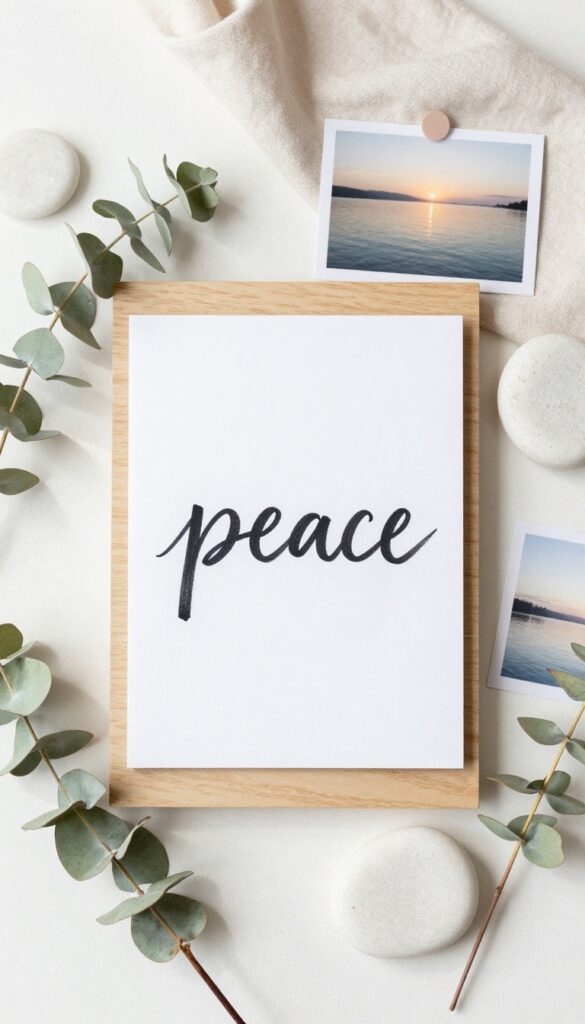
A single word can hold more power than a thousand images. By choosing one word—like 'peace, ' 'growth, ' or 'brave'—you give your vision board a clear, focused anchor. This minimalist approach cuts through the noise and keeps your intention front and center all year long.
Pick a word that resonates with where you want to be, not just where you are. Let it be a feeling, a goal, or a way of being. Then build your board around that word using colors, textures, and images that amplify its meaning.
Keep it simple—no clutter, no distractions. Every element should whisper that one word back to you.
Choosing Your Word
Spend a few quiet minutes thinking about what you need most right now. It could be 'calm' if you're overwhelmed, 'strength' if you're facing a challenge, or 'joy' if life feels gray. Write down a few options, then sit with each one.
The right word will feel like a deep breath.
Building The Board
Start with a small corkboard or a piece of poster board. Find images that evoke your word—maybe a serene lake for 'peace' or a sprouting seed for 'growth. ' Add a quote or two that reinforces the theme. Use colors that match the mood: blues and greens for calm, warm oranges for energy.
Arrange everything loosely before gluing.
Daily Practice
Place your one-word board where you'll see it every day—by your desk, on your nightstand, or inside your closet door. Each morning, pause for a few seconds and let the word sink in. Let it guide your decisions and reactions.
Over time, that single word can reshape your entire mindset.
9. Design a Vision Board for Your Ideal Week
Instead of dreaming about a distant future, bring your vision into the present by mapping out your ideal week. This board isn't about goals years away—it's about how you want to feel and spend your time Monday through Sunday. By creating a visual schedule that balances work, rest, fun, and connection, you turn abstract self-care into a daily reality.
Start by dividing your board into seven sections, one for each day. Use images that represent your priorities: a calm morning routine, focused work blocks, time with friends, and evenings to unwind. The goal is to see what a balanced week looks like and then adjust your real schedule to match.
Choose Your Weekly Priorities
Before you start cutting out images, list the non-negotiables: sleep, meals, exercise, work hours, and downtime. Then add the extras that bring you joy—a hobby, a phone call with a friend, or a solo walk. This helps you see where your time actually goes versus where you want it to go.
Create A Visual Rhythm
Use colors, icons, or small photos to represent different types of activities. For example, green for active time, blue for rest, yellow for social connection. Arrange them in a way that feels harmonious, not cluttered.
The board should feel like a gentle guide, not a rigid schedule.
Use It As A Weekly Reset
Place your board somewhere you'll see it every morning. On Sunday evening, glance at it to set intentions for the week ahead. Let it remind you to protect your time for self-care, even when life gets busy.
Over time, your ideal week will start to feel more like your real week.
10. Make a 'Future Self' Vision Board
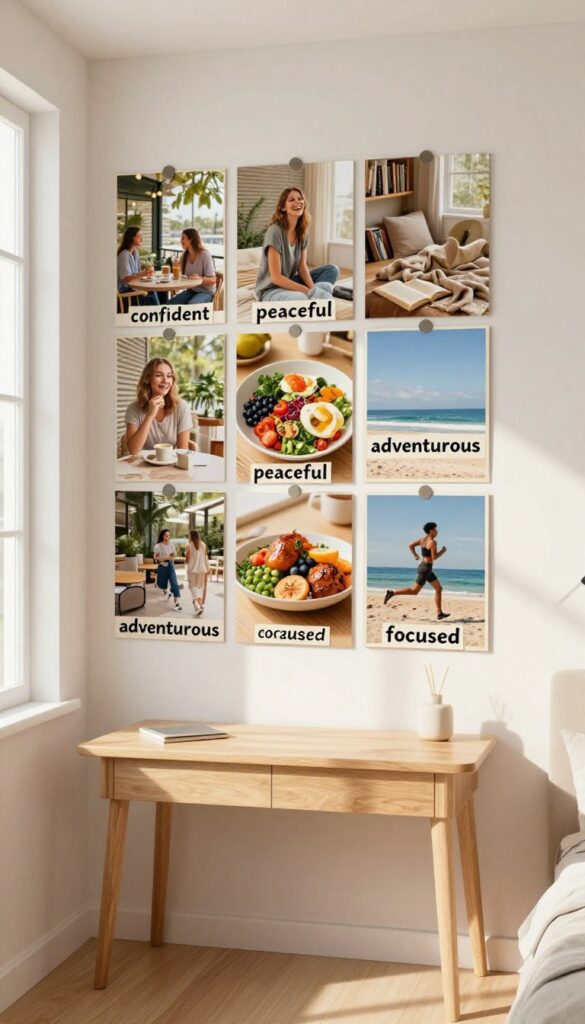
This board is less about goals and more about identity. You're not just collecting images of what you want to have—you're gathering clues about who you want to become. By focusing on your future self, you shift from chasing outcomes to embodying a new way of being.
Start by asking yourself: What does my ideal day look like one year from now? How do I feel when I wake up? What am I wearing, eating, or doing for fun?
Then hunt for images that match those feelings—a person laughing with friends, a cozy reading nook, a healthy meal on a sunny patio. Arrange them in a way that tells a story of your future life. Place the board somewhere you'll see it every morning, like above your desk or inside your closet door.
Choose Images That Evoke Emotion
Don't just pick pretty pictures. Pick ones that make you feel something—calm, excited, proud. If a photo of a person jogging on a beach makes you feel free, that's a keeper.
The emotional pull is what programs your brain.
Add Words That Anchor Your Identity
Cut out or write words that describe your future self: confident, peaceful, adventurous, focused. Place them among the images. These words become affirmations you see daily.
Update It As You Grow
Your future self evolves. Every few months, swap out images that no longer fit and add new ones that reflect your changing vision. This keeps the board alive and relevant.
11. Build a Vision Board for Your Safe Space
Your environment shapes your mood more than you realize. A vision board for your safe space helps you design a corner or room that truly supports your mental health. Instead of just pinning goals, you'll map out colors, textures, and furniture that feel like a hug for your senses.
Start by closing your eyes and imagining your ideal cozy corner. What colors calm you? Soft blues, warm neutrals, or earthy greens?
What textures invite you to relax—a chunky knit blanket, a velvet cushion, or a smooth wooden table? Collect images that capture these feelings. Then, use the board as a blueprint to bring that space to life.
Rearrange furniture, add a plant, or swap harsh lighting for warm lamps. Your safe space becomes a physical reminder that you deserve peace.
Mood Mapping
Before cutting out images, list three emotions you want your safe space to evoke—like calm, safety, or joy. Then find visuals that match each emotion. This keeps your board focused and intentional.
Texture & Touch
Don't just look for pictures of rooms. Search for close-ups of fabrics, finishes, and natural elements. A photo of soft wool or smooth stone can inspire you to add tactile comfort to your space.
From Board To Reality
Once your board is complete, pick one small change to make this week. Maybe it's adding a throw pillow, clearing a cluttered shelf, or hanging sheer curtains. Small steps turn vision into sanctuary.
12. Create a 'Words of Affirmation' Board
Words have a sneaky way of sticking in your mind, especially the harsh ones you tell yourself. A words of affirmation board flips the script by surrounding you with kind, empowering messages that drown out the inner critic. Place it where you'll see it daily—like near your mirror or desk—and let those phrases sink in.
This board is all about language that lifts you up. It's not about goals or pictures; it's about rewiring your self-talk with reminders of your worth and strength.
Pick Your Power Phrases
Start by listing affirmations that directly counter your most common negative thoughts. If you often think "I'm not good enough, " write "I am enough exactly as I am. " Choose 5–10 phrases that feel true or that you want to believe.
Design For Daily Glances
Use a small corkboard or a magnetic frame. Write each affirmation on a card or sticky note in a font and color that feels good to you. Arrange them in a way that's easy to scan—maybe a grid or a circular pattern.
Add a few inspiring quotes from people you admire.
Rotate And Refresh
Keep the board alive by swapping out affirmations every few weeks. As you grow, your needs change. Let the board evolve with you.
You can also add new phrases you discover in books, podcasts, or conversations.
13. Design a Vision Board for Your Next Adventure
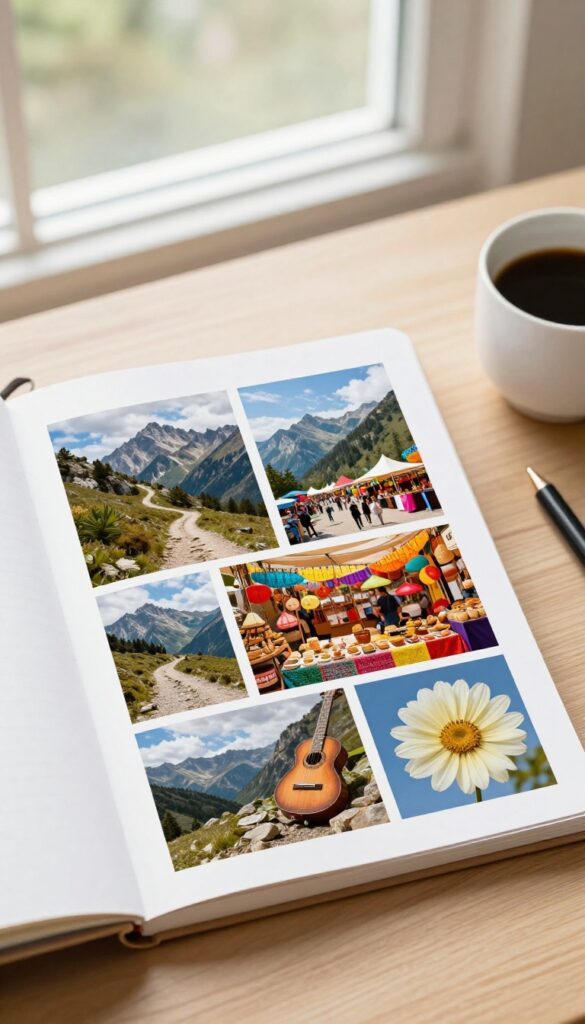
Dreaming about your next big trip or a new hobby? Channel that excitement into a vision board that captures the thrill of the unknown. This isn't about rigid planning—it's about letting your imagination run wild and fueling your sense of wonder.
Gather images that spark joy and curiosity: a snapshot of a mountain trail, a colorful market abroad, or even a musical instrument you've always wanted to learn. Arrange them in a way that tells a story of discovery and freedom. Place this board somewhere you'll see daily, like above your desk or on your nightstand.
Let it remind you that adventure is always within reach, even if it starts small.
Choose Your Adventure Theme
Decide whether your next adventure is a physical journey, like a hiking trip, or a personal one, like learning to paint. Pick a theme that excites you and stick with it. This focus makes your board feel cohesive and purposeful.
Gather Inspiring Visuals
Flip through magazines, print photos from Pinterest, or use travel brochures. Look for images that evoke emotion—sunrises, local cuisine, or people laughing. Don't overthink it; if it makes you smile, it belongs on the board.
Add Personal Touches
Include a small memento from a past adventure, like a ticket stub or a pressed flower. Write down a few words that describe how you want to feel—"free, " "curious, " "alive. " These personal elements make the board uniquely yours.
14. Make a 'Mindful Moments' Vision Board
Life moves fast, and it's easy to forget to slow down. A 'Mindful Moments' vision board helps you carve out space for stillness in your day. By curating images that represent calm activities, you create a visual anchor that gently pulls you back to the present.
This board isn't about productivity or goals—it's about presence. Fill it with pictures of meditation, a peaceful forest path, a steaming cup of tea, or someone journaling by a window. Place it where you'll see it often, like near your desk or beside your bed.
Each glance becomes a mini-invitation to pause, take a breath, and reset.
Choose Your Calm Icons
Think about what genuinely relaxes you. Maybe it's yoga, reading, or listening to rain. Search for images that capture those activities—not generic stock photos, but scenes that feel personal and soothing.
The more specific, the better.
Design For Daily Reminders
Arrange your images in a way that tells a story of a mindful day. Start with a morning meditation scene, then a midday nature walk, and end with an evening journaling ritual. This flow helps you visualize weaving calm into your routine.
Use It As A Breathing Cue
Every time you see your board, take one deep breath. That's it. Over time, this simple habit trains your brain to associate the board with relaxation.
It becomes a trigger for instant calm, no matter how hectic things get.
15. Build a Vision Board for Your Career Self-Care
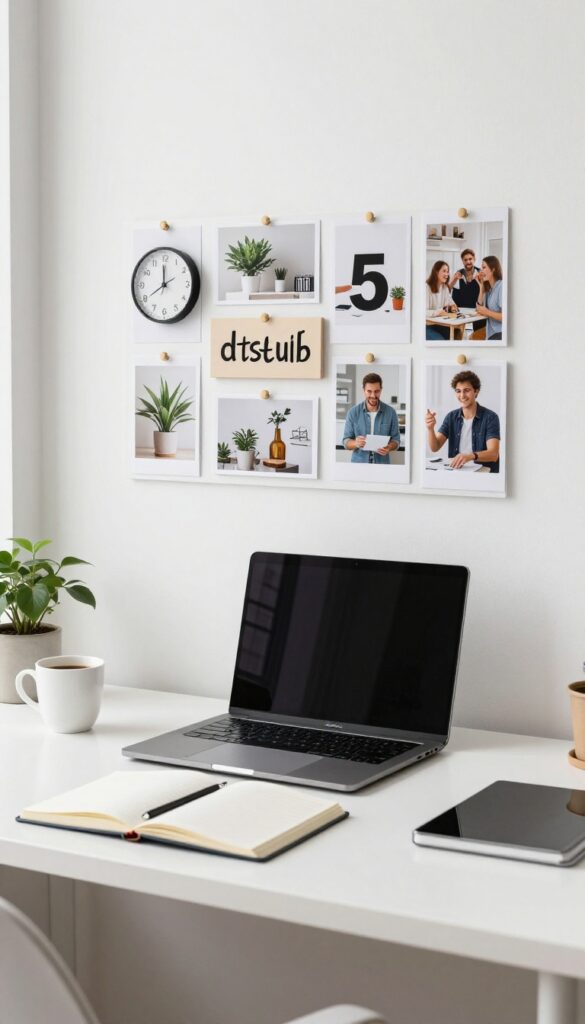
Work doesn't have to drain you. A career-focused vision board helps you define what a healthy professional life looks like—one that respects your boundaries and fuels your passions. By visualizing your ideal work environment, you can shift your daily mindset from survival to thriving.
Gather images that represent your version of work-life balance: a tidy desk with a plant, a team that collaborates without drama, or a project that excites you. Place the board where you'll see it during your workday, like near your monitor or in your planner. Let it remind you to protect your energy and pursue what truly matters.
Define Your Work Boundaries
Include symbols of boundaries, like a clock showing when you log off, a 'do not disturb' sign, or a peaceful hobby after hours. This visual cue helps you remember that self-care includes saying no to overwork.
Highlight Energizing Projects
Add pictures of the type of work that lights you up—whether it's creative brainstorming, helping others, or solving puzzles. Seeing these images daily can motivate you to seek more of that work.
Surround Yourself With Support
Find images that represent a supportive team: people laughing, collaborating, or giving high-fives. Visualizing positive work relationships can help you attract or nurture them in real life.
FAQ
Do I need to be artistic to make a vision board?
Not at all. Vision boards are about intention, not art. You can use magazine clippings, printed images, or digital tools—no drawing skills required.
How often should I update my vision board?
There's no strict rule. Some people refresh theirs every season or when their goals shift. If the board stops inspiring you, it's time for a change.
Can a vision board really help with self-care?
Yes. The act of creating one is meditative, and seeing it daily reinforces positive habits and mindsets. It's a visual anchor for your self-care intentions.
Should I include specific goals or just feelings?
Both work. Goals give direction, while feelings keep you motivated. A mix of tangible images (like a book you want to read) and emotional cues (like a sunset) is ideal.
Where should I place my vision board?
Put it somewhere you'll see it daily—beside your bed, on your desk, or as a phone wallpaper. The key is regular, effortless exposure.
Conclusion
A vision board is only as powerful as the small, real-world actions it inspires. Pick one idea from this list that feels genuinely exciting—maybe a morning affirmation ritual or a weekly collage session—and try it for a few days. Notice how that single shift changes your mindset.
Over time, these tiny practices will train your brain to see possibilities instead of obstacles. Your fresh mindset isn't a distant goal; it's built one intentional moment at a time.