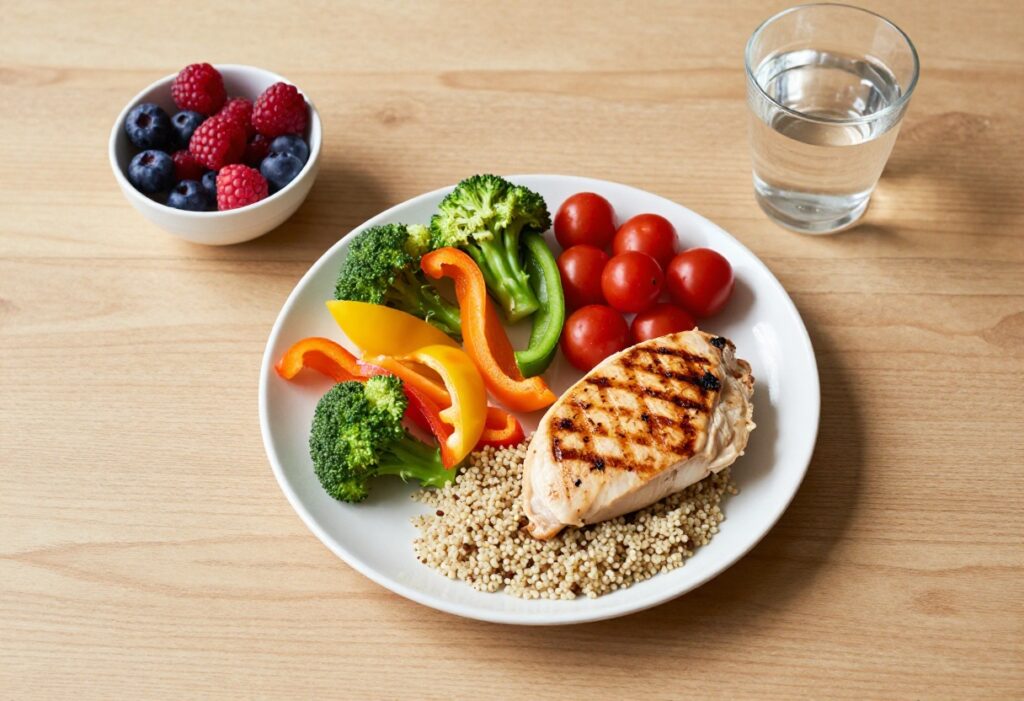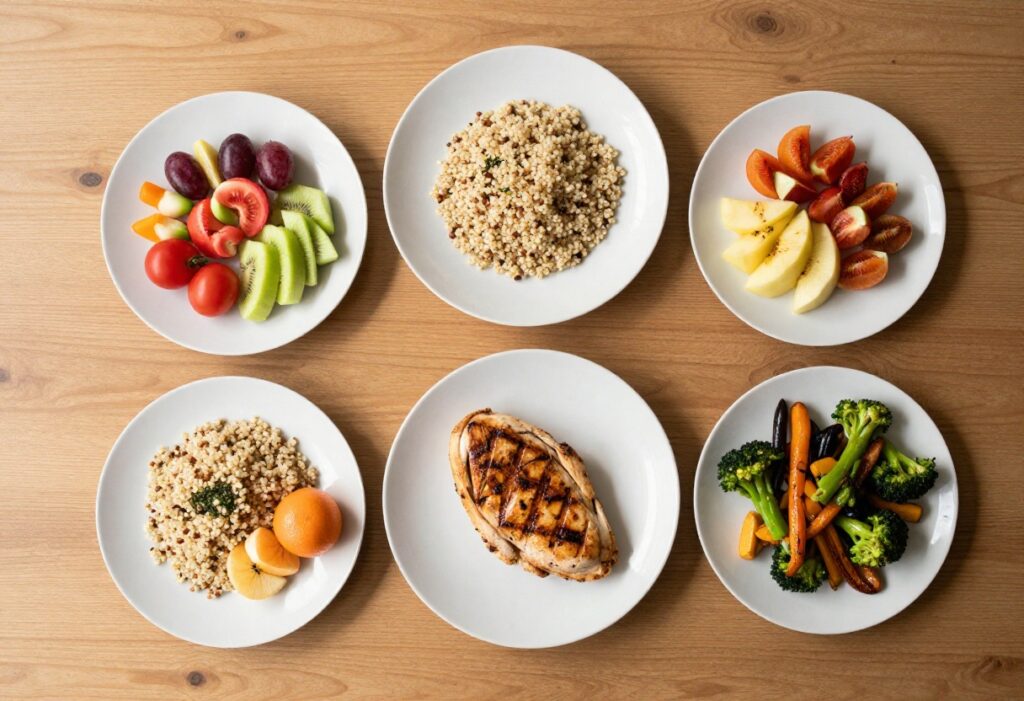
Building muscle isn't just about grinding in the gym—it's about what you put on your plate. Protein is the superstar nutrient that repairs and rebuilds muscle fibers after training, but you also need the right balance of carbs and fats to fuel performance and recovery.
Without a solid meal plan, even the most dedicated lifter can stall. This guide walks you through everything you need to know about a protein-packed eating strategy for muscle gain.
You'll learn how much protein you actually need, how to time your meals, and get a full 7-day sample plan to kickstart your progress. Whether you're a beginner or looking to refine your diet, these practical tips will help you build lean mass effectively.
Why Protein Is the Key to Muscle Growth
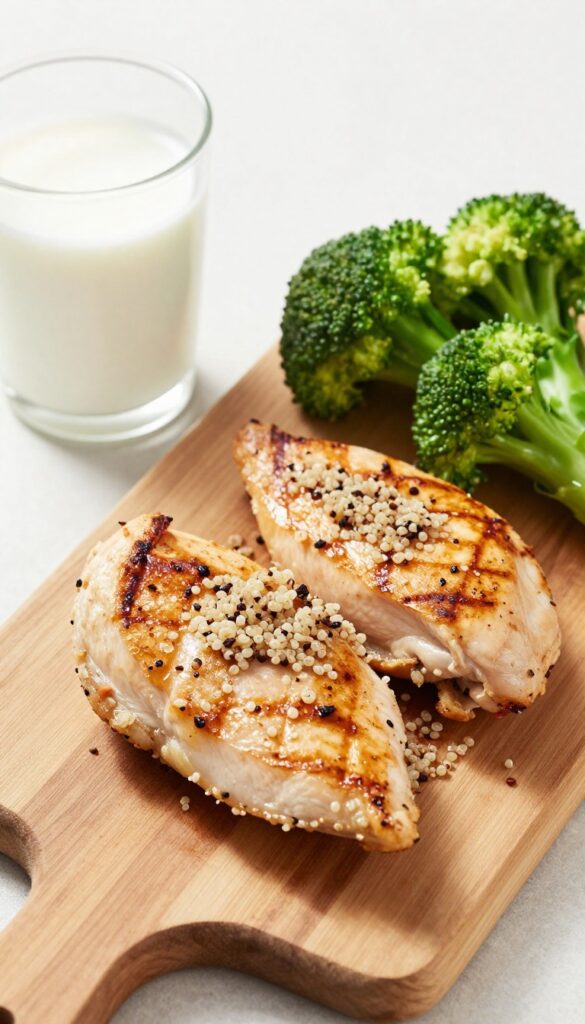
When you lift weights or perform resistance training, you create tiny tears in your muscle fibers. Protein provides the amino acids your body needs to repair those tears and build new muscle tissue. Without enough protein, your body struggles to recover and grow, no matter how hard you train.
How Much Protein Do You Really Need?
The general recommendation for muscle gain is 1.6 to 2.2 grams of protein per kilogram of body weight per day. For a 180-pound (82 kg) person, that translates to roughly 130 to 180 grams of protein daily. Spreading this intake across 3-4 meals helps maximize muscle protein synthesis.
Key Protein Guidelines
- Protein repairs and builds muscle tissue after exercise.
- Aim for 20-40 grams of protein per meal.
- Include a protein source within 2 hours post-workout.
- Complete proteins (animal sources) contain all essential amino acids.
The Role of Calories and Macronutrients
Protein alone isn't enough—you also need a calorie surplus to fuel muscle growth. Consuming more calories than you burn provides the energy required for building new tissue. Carbohydrates replenish glycogen stores and support intense workouts, while healthy fats aid hormone production, including testosterone, which plays a role in muscle growth.
Macro Balance for Muscle Gain
- Calorie surplus: 300-500 calories above maintenance.
- Carbohydrates: 45-60% of total calories for energy.
- Fats: 20-35% of total calories for hormone health.
- Adjust macros based on individual response and training volume.
Building Your Muscle Gain Meal Plan: The Basics
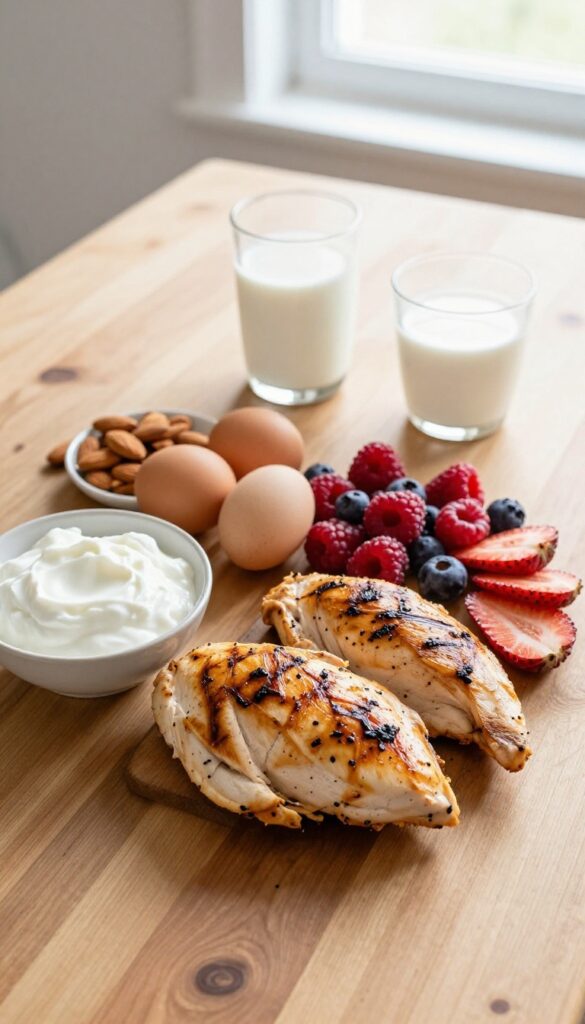
Before diving into a full week of meals, it helps to understand the building blocks of a muscle gain diet. The two most important factors are choosing the right protein sources and timing your meals to support your training. Let's break down each one.
Choose Your Protein Sources Wisely
Not all protein is created equal. To maximize muscle growth, you want high-quality proteins that provide all essential amino acids. Here are some of the best options:
- Lean meats: Chicken breast, turkey, lean beef, and pork loin are packed with protein and relatively low in fat.
- Eggs: Whole eggs are a complete protein source and also provide healthy fats. Egg whites are great for a low-fat option.
- Dairy: Greek yogurt, cottage cheese, and milk offer casein and whey protein, which are excellent for muscle repair.
- Legumes: Lentils, chickpeas, and black beans are plant-based options that also provide fiber and carbs.
- Plant proteins: Tofu, tempeh, edamame, and seitan are great for vegetarians and vegans. Pair them with grains for a complete amino acid profile.
Aim to include a variety of these sources in your diet to ensure you're getting a wide range of nutrients. For most people, 0.7 to 1 gram of protein per pound of body weight per day is a good target for muscle gain.
Timing Your Meals Around Workouts
When you eat matters almost as much as what you eat. Proper timing can enhance performance, speed up recovery, and maximize muscle protein synthesis.
Pre-Workout Meal
Eat a meal containing carbohydrates and moderate protein about 1–2 hours before your workout. This provides energy and helps prevent muscle breakdown. Good options include a banana with peanut butter, oatmeal with whey protein, or a turkey sandwich on whole-grain bread.
Post-Workout Meal
Within 30–60 minutes after training, consume a meal high in protein and carbohydrates. This is when your muscles are most receptive to nutrients. Examples: a protein shake with a banana, grilled chicken with sweet potatoes, or Greek yogurt with berries and granola.
Spread your protein intake evenly across 4–6 meals throughout the day. This keeps your body in a positive nitrogen balance and supports steady muscle growth.
Sample 7-Day Muscle Gain Meal Plan
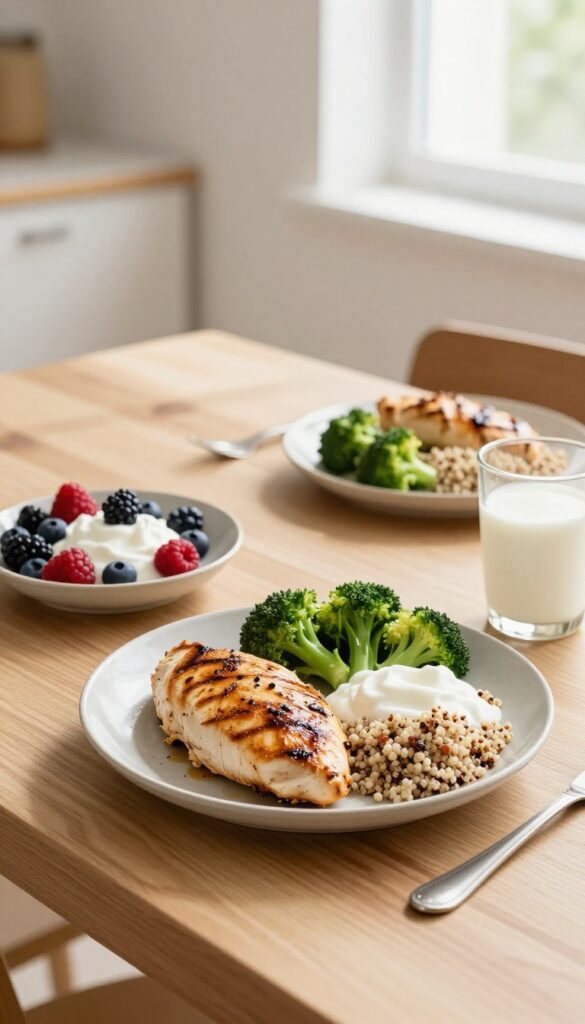
This 7-day meal plan is designed for a person weighing around 180 lbs (82 kg) who is looking to build muscle. Each day provides roughly 2,800–3,000 calories and 180–200g of protein, distributed across breakfast, lunch, dinner, and two snacks. Adjust portion sizes up or down based on your own body weight, activity level, and goals.
The plan emphasizes a variety of protein sources—chicken, beef, fish, eggs, dairy, and plant-based options—to ensure you get a wide range of amino acids and nutrients.
Day Meal Plan Overview
| Day | Breakfast | Lunch | Dinner | Snacks | Key Protein Sources |
| Day 1: High-Protein Start | 3 scrambled eggs + 2 slices whole wheat toast + 1 cup Greek yogurt | Grilled chicken breast (8 oz) + quinoa (1 cup cooked) + steamed broccoli | Lean beef stir-fry (6 oz sirloin) + brown rice (1 cup) + mixed veggies | Protein shake (2 scoops) + apple; 1 oz almonds | Eggs, chicken, beef, whey |
| Day 2: Lean and Green | Oatmeal (1 cup dry) + 1 scoop protein powder + 1 tbsp peanut butter | Turkey breast (6 oz) + sweet potato (1 large) + green beans | Grilled salmon (8 oz) + asparagus + wild rice (1 cup) | Cottage cheese (1 cup) + pineapple; 2 hard-boiled eggs | Turkey, salmon, eggs, dairy |
| Day 3: Red Meat Refuel | 2 whole eggs + 2 egg whites + 1 cup spinach + 1 slice cheese on whole wheat | Grilled chicken thigh (6 oz) + quinoa + roasted carrots | Beef steak (8 oz ribeye) + baked potato + side salad | Greek yogurt (1 cup) + berries; 1 oz walnuts | Beef, chicken, eggs, yogurt |
| Day 4: Poultry Power | Protein pancakes (2 scoops powder + 1 egg + 1/2 cup oats) + syrup | Chicken breast (8 oz) + couscous (1 cup) + roasted zucchini | Turkey meatballs (6 oz) + whole wheat pasta (2 oz dry) + marinara | String cheese (2 sticks) + 1 pear; 1/4 cup mixed nuts | Chicken, turkey, whey, cheese |
| Day 5: Fish Feast | Smoked salmon (4 oz) + 2 eggs + 1 slice rye bread | Tuna salad (1 can tuna + 2 tbsp mayo) on whole wheat wrap + apple | Grilled cod (8 oz) + quinoa + roasted Brussels sprouts | Protein shake (2 scoops) + banana; 1 oz cashews | Salmon, tuna, cod, whey |
| Day 6: Plant-Based Protein Day | Tofu scramble (8 oz tofu) + whole wheat toast + 1 cup soy milk | Lentil soup (2 cups) + whole grain roll + 1 tbsp peanut butter | Chickpea curry (1 can chickpeas) + brown rice + 1/2 cup Greek yogurt | Edamame (1 cup shelled); 1/4 cup almonds | Tofu, lentils, chickpeas, yogurt |
| Day 7: Flexible Refuel | 3-egg omelet with cheese, mushrooms, and bell peppers + 1 slice toast | Leftover from Day 6 dinner (chickpea curry) or chicken breast + rice | Grilled chicken (8 oz) + roasted potatoes + mixed greens salad | Cottage cheese (1 cup) + peaches; 1 oz pecans | Eggs, chicken, dairy, legumes |
High-Protein Snacks to Boost Your Intake
Snacking smartly can add 20-40 grams of protein to your daily intake without much effort. Here are some easy, high-protein snacks to keep you on track for muscle gain.
Top High-Protein Snacks
- Greek yogurt with nuts: 1 cup (240g) Greek yogurt provides about 20g protein. Add a handful of almonds (6g protein) for a total of 26g.
- Cottage cheese and fruit: 1 cup (225g) cottage cheese offers 28g protein. Pair with berries or peach slices for extra vitamins.
- Hard-boiled eggs: 2 large eggs deliver 12g protein. Easy to prep ahead and grab on the go.
- Protein shakes or smoothies: 1 scoop (30g) protein powder mixed with milk or water gives 25-30g protein. Blend with banana and spinach for a nutrient boost.
- Beef jerky or turkey sticks: 1 ounce (28g) beef jerky has about 9-12g protein. Look for low-sodium options with minimal additives.
- Edamame or roasted chickpeas: 1 cup (155g) edamame provides 18g protein. Roasted chickpeas (1/2 cup) offer about 7g protein and a satisfying crunch.
Timing Tip
Aim for snacks that contain 15-25g protein, especially post-workout or between meals. Pairing protein with a carb source (like fruit or whole-grain crackers) can enhance recovery and energy.
These snacks are quick, portable, and versatile. Rotate them to keep your diet interesting and meet your daily protein targets.
Common Mistakes to Avoid on a Muscle Gain Diet
Even with the best intentions, it's easy to make mistakes that slow your progress or even lead to fat gain. Avoiding these common pitfalls will keep you on track toward building lean muscle efficiently.
Not Eating Enough Calories
Muscle growth requires a calorie surplus—you need to consume more energy than you burn. Many people underestimate how much they need to eat, especially when training hard. Without a surplus, your body lacks the raw materials to build new muscle tissue.
Track your intake for a few days to see where you stand, and aim for about 300–500 calories above maintenance. If you're not gaining about 0.5–1 pound per week, increase your calories slightly.
Relying Too Much on Protein Supplements
While protein shakes and bars are convenient, they shouldn't replace whole foods. Whole food sources like chicken, eggs, fish, dairy, legumes, and grains provide a broader spectrum of nutrients—including vitamins, minerals, and healthy fats—that support overall health and muscle recovery. Use supplements to fill gaps, not as your primary protein source.
Aim to get at least 80% of your protein from whole foods.
Ignoring Micronutrients and Fiber
A diet focused solely on protein and calories can leave you short on essential vitamins, minerals, and fiber. Micronutrients like zinc, magnesium, and vitamin D play key roles in hormone production and muscle function. Fiber aids digestion and helps you feel full, which can prevent overeating unhealthy foods.
Include a variety of colorful vegetables, fruits, whole grains, and nuts to cover your bases. For example, add spinach to your eggs, snack on berries, and choose brown rice over white.
By steering clear of these mistakes, you'll maximize your muscle gains while staying healthy and energized. Remember, consistency with both diet and training is what ultimately delivers results.
FAQ
Can I build muscle on a vegetarian diet?
Absolutely. Plant-based proteins like lentils, chickpeas, tofu, tempeh, seitan, and quinoa can provide all the essential amino acids when combined properly. You may need to eat slightly larger volumes to meet protein targets, but it's entirely possible.
Supplementing with pea or rice protein powder can also help.
Do I need protein shakes to gain muscle?
Not necessarily. Whole foods should be your primary protein sources. However, protein shakes can be a convenient way to hit your daily protein goals, especially post-workout or when you're on the go.
They're a supplement, not a replacement.
How soon after a workout should I eat protein?
The anabolic window is wider than once thought. Eating protein within 2 hours post-workout is ideal, but the total daily protein intake matters more than exact timing. A meal with protein and carbs soon after training can enhance recovery.
Can I eat the same meals every day and still gain muscle?
Yes, as long as you meet your macro and calorie needs consistently. However, variety ensures you get a range of micronutrients and prevents dietary boredom. Rotating a few staple meals is a practical approach.
How do I adjust the meal plan if I weigh more or less than 180 lbs?
Use your body weight to calculate protein needs (1.6-2.2 g per kg). For calories, start with your maintenance level and add 300-500 surplus. Adjust portions of protein, carbs, and fats proportionally.
Online calculators can help you find your numbers.
Conclusion
A muscle gain meal plan doesn't have to be complicated. Focus on hitting your protein targets, eating in a slight calorie surplus, and choosing whole, nutrient-dense foods. The sample plan provided is a solid starting point, but feel free to swap meals based on your preferences and dietary needs.
Remember, consistency beats perfection. Stick with your nutrition plan alongside a progressive resistance training program, and you'll see results over time. Fuel your body right, train hard, and be patient—your muscles will thank you.

Dr. Pallab Kishore, MS in Orthodontics and owner of Orthodontic Braces Care, shares expert tips on braces, aligners, and oral health from 10+ years of experience.