Last updated on June 26th, 2026 at 03:38 pm
Your brain is still running at full speed, but your body has already checked out. That heavy, foggy feeling means it's time for a reset—not a full life overhaul. These 23 self-care steps are designed to give you immediate relief without adding more stress.
Each one takes less than 15 minutes and targets a different kind of exhaustion. You don't need a spa day or a week off. You just need one small move that actually works.
Pick the step that matches how you feel right now. The goal isn't perfection. It's feeling human again by the end of the day.
1. Drink a Full Glass of Water Before Anything Else

Before you reach for coffee, your phone, or anything else, start with water. Dehydration is one of the fastest ways to feel sluggish and unfocused. Even mild dehydration can mimic the symptoms of exhaustion and brain fog, making you think you need more sleep when you really just need hydration.
Drink 8–12 ounces of water slowly, preferably at room temperature. If you want a boost, add a squeeze of lemon for vitamin C or a pinch of salt for electrolytes. This simple step rehydrates your cells, wakes up your digestion, and gives your brain the fluid it needs to function clearly.
Why Water First Matters
Your body loses water overnight, even if you don't realize it. Starting your reset with water immediately addresses one of the most common causes of low energy. It also sets a mindful tone for the day—a small act of care that signals to your body that you're paying attention.
How To Make It A Habit
Keep a glass or bottle of water on your nightstand so you see it first thing. If plain water feels boring, try adding cucumber slices, mint, or a splash of fruit juice. The goal is to make it easy and pleasant so you actually do it.
2. Step Outside for 60 Seconds of Sunlight
You don’t need a full morning routine or a 10-minute meditation. Just open the door and let the sun hit your face. Natural light is a direct signal to your brain that it’s time to be awake and alert.
Even a single minute can reset your mood and energy.
Natural light is one of the fastest ways to shift your state. It triggers the release of serotonin, the hormone that stabilizes mood and promotes calm focus. Inside, artificial lighting keeps your brain in a dim, sleepy mode.
Stepping outside breaks that cycle instantly.
Why 60 Seconds Works
Your body’s internal clock responds to light within seconds. A brief exposure to sunlight tells your suprachiasmatic nucleus—the brain’s master clock—that it’s daytime. This suppresses melatonin and boosts cortisol in a healthy way, giving you natural energy without caffeine.
How To Make It Count
Don’t just stand in the doorway. Walk outside, face the sun, and close your eyes for a few deep breaths. If it’s cloudy, the light is still effective—just aim for a spot with the brightest sky.
No sunglasses needed; let your eyes adjust naturally.
When To Do It
Morning light is most powerful for setting your circadian rhythm, but any time you feel sluggish works. If you’re stuck indoors all day, a quick sunlight break after lunch can prevent the afternoon slump. Even on a busy day, you have 60 seconds.
3. Do a 2-Minute Body Scan
When your mind is racing and your shoulders are up by your ears, a body scan is the fastest way to hit pause. You don't need to meditate for an hour or breathe in any special pattern. Just close your eyes and mentally travel from your toes to your scalp, noticing where you're holding tension.
That's it.
This isn't about fixing anything. It's about noticing. Often, just becoming aware of a clenched jaw or tight hips is enough to make them soften.
No effort required. You might be surprised how much your body has been gripping without you realizing it.
Start At Your Feet
Begin with your toes. Are they curled? Relaxed?
Move your attention slowly up through your ankles, calves, and knees. Don't judge—just observe. If you find tension, imagine your breath flowing into that spot.
Work Through Your Core And Back
Next, scan your stomach, lower back, and chest. This is where stress often lives. Notice if your belly is tight or your shoulders are hunched.
Again, no need to change anything. Awareness alone can trigger a release.
Finish At Your Head
Finally, check your jaw, forehead, and scalp. Are you clenching your teeth? Furrowing your brow?
Let your face go slack. Take one deep breath and open your eyes. You've just reset your nervous system in two minutes.
4. Write Down Three Things That Went Well
Your brain has a negativity bias—it clings to what went wrong and ignores the small wins. That's why gratitude isn't just fluff; it's a quick way to shift your mental state. You don't need to feel grateful for everything, just three specific things that actually happened.
Take out your phone or a scrap of paper. List three things that went well today or yesterday. They don't have to be big—a good cup of coffee, a green light when you were in a hurry, a coworker who smiled at you.
Then read them out loud. Saying them makes them real.
Make It Specific
Avoid vague entries like "my family" or "my job. " Instead, write "my daughter drew me a picture" or "I finished a task I'd been avoiding. " Specifics trigger a stronger emotional response and help your brain rewire faster.
Read Them Aloud
There's something about hearing your own voice say positive things. It cuts through the mental noise. If you feel silly, that's fine—do it anyway.
The effect is immediate.
Do It At The Same Time Tomorrow
Consistency builds the habit. Try pairing this with another reset step, like drinking water or stretching. Over time, your brain will start scanning for good moments automatically.
5. Stretch Your Neck and Shoulders

Most stress lives in your upper body, especially in your neck and shoulders. Hours of hunching over screens or tensing up during a rough day can leave that area feeling like concrete. A quick stretch routine can release that built-up tension and help your brain signal your body to relax.
Slowly roll your shoulders, tilt your ear to each shoulder, and turn your head side to side. Hold each stretch for 15 seconds. That's all it takes to interrupt the stress cycle and give your upper body a fresh start.
Why This Works
Your neck and shoulders carry the physical weight of stress. When you're anxious, you unconsciously tighten these muscles, which can lead to headaches and fatigue. Stretching them sends a signal to your nervous system that it's safe to let go.
How To Do It
Sit or stand comfortably. Roll your shoulders backward 5 times, then forward. Next, gently tilt your head to the right, holding for 15 seconds, then left.
Finally, turn your head to look over your right shoulder, hold, then left. Breathe deeply throughout.
When To Use This
This stretch is perfect for mid-afternoon slumps, after a long drive, or whenever you feel your shoulders creeping up toward your ears. It's also a great reset before a stressful meeting.
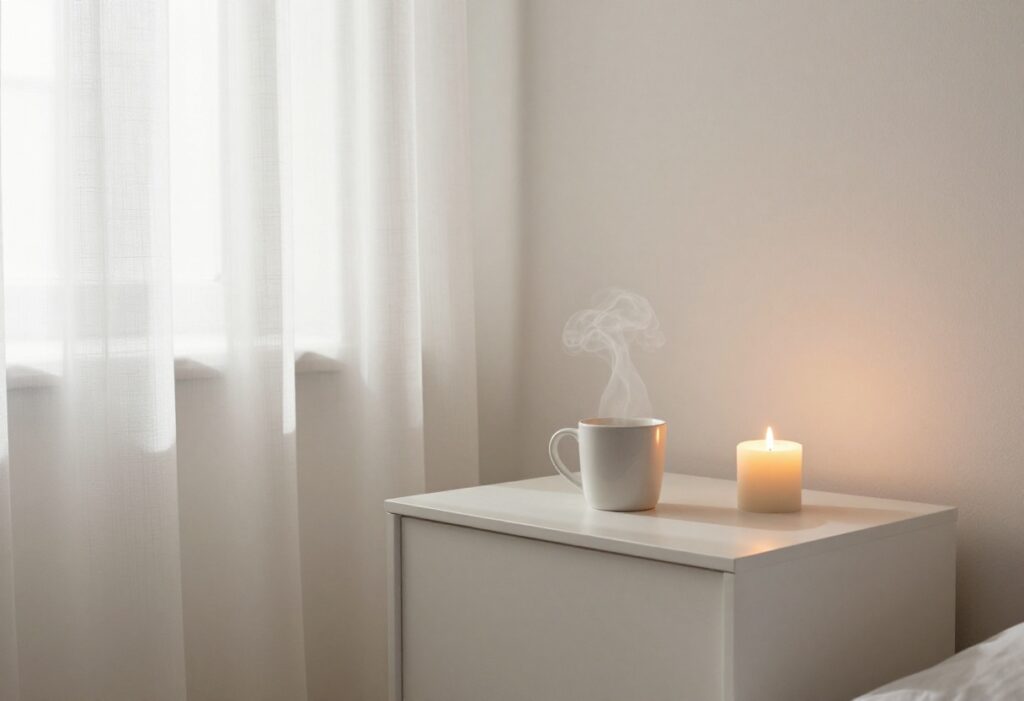
6. Make a Cup of Herbal Tea
Brewing tea is a tiny ritual that forces you to slow down. The act of boiling water, steeping leaves, and waiting a few minutes gives your brain a gentle break from racing thoughts. Caffeine-free options like chamomile, peppermint, or lavender won't interfere with your sleep or add to any jitters you already feel.
Hold the warm mug in both hands and let the heat sink into your palms. Breathe in the steam before taking the first sip. That simple pause can shift your nervous system from fight-or-flight to rest-and-digest mode.
The ritual of brewing tea is calming. Choose caffeine-free options like chamomile, peppermint, or lavender. Hold the warm mug and breathe in the steam.
Pick The Right Tea
Chamomile is great for winding down, peppermint can help with tension headaches, and lavender is soothing for anxiety. Avoid anything with caffeine—green or black tea might make it harder to relax.
Make It A Mini Ritual
Don't just microwave a mug of water. Boil a kettle, pick a mug you love, and watch the tea steep for 3-5 minutes. Use that time to take a few deep breaths or just stare out the window.
Engage Your Senses
Notice the warmth of the mug, the scent of the tea, and the taste as you sip. This simple mindfulness exercise can ground you in the present moment and quiet a busy mind.
7. Declutter One Small Surface
Visual clutter is sneaky. It piles up one item at a time until your brain feels as messy as your nightstand. Clearing just one small surface—no more than a few square feet—can instantly lift that heavy mental fog.
You don't need to organize the whole house. Just pick one spot and make it clean.
Start with a surface you see often: your desk corner, kitchen counter, or bathroom vanity. Grab a small basket or bag and remove everything that doesn't belong. Wipe it down with a damp cloth.
Put back only the essentials. That's it. In under five minutes, you'll have a clear space that signals to your brain: things are under control.
Why It Works
Your brain processes visual information constantly. When it sees clutter, it subconsciously registers unfinished tasks. A clean surface reduces that cognitive load, freeing up mental energy for what actually matters.
It's like giving your brain a deep breath.
How To Pick The Right Surface
Choose a surface that's in your direct line of sight during your daily routine. The kitchen counter where you eat breakfast, the corner of your desk where you work, or the nightstand you see before bed. Avoid closets or drawers—those take longer.
Stick to open, flat surfaces for instant payoff.
Make It A Micro-ritual
Turn this into a daily reset by clearing the same surface every evening before bed. Keep a small tray or bowl for items that need a home. Over time, this two-minute habit becomes a signal to your brain that the day is done and it's time to relax.
8. Listen to One Song Without Distraction
When was the last time you actually listened to a song—not as background noise, but as the main event? Most of us multitask through music, using it to fill silence while we scroll or commute. But a single song, played with full attention, can reset your nervous system in under five minutes.
It's a tiny act of presence that costs nothing.
Put on headphones and play a song you love. Close your eyes and listen to every instrument and lyric. Let it be the only thing you do.
Why It Works
Focused listening activates the parasympathetic nervous system, lowering cortisol and heart rate. Your brain stops hopping between worries and anchors to the rhythm and melody. It's like a mini meditation, but easier because the music does the work.
Choose The Right Song
Pick something familiar that you genuinely enjoy—nostalgia boosts the calming effect. Instrumental tracks work well if lyrics distract you, but a favorite vocal song can also feel like a comforting conversation. Avoid anything too intense or chaotic.
Make It A Ritual
Try this daily for one week. Put on headphones, close your eyes, and press play. Notice how your shoulders drop and your breathing deepens.
Over time, this single-song pause becomes a reliable reset button you can use anytime.
9. Take 10 Deep Belly Breaths
Breathing is automatic, but deep belly breathing isn't. When you're stressed, your breaths become shallow and fast, keeping your body in fight-or-flight mode. Taking just 10 slow, intentional breaths can flip that switch and calm your nervous system.
Inhale deeply through your nose, letting your belly rise. Exhale slowly through your mouth. Count each breath.
This activates your parasympathetic nervous system, lowering heart rate and blood pressure. It's a quick reset you can do anywhere, anytime.
Why Belly Breathing Works
Shallow chest breathing signals danger to your brain. Belly breathing, or diaphragmatic breathing, engages the vagus nerve, which tells your body it's safe. This triggers a relaxation response that reduces cortisol and eases tension.
How To Do It Right
Sit or lie down comfortably. Place one hand on your chest and the other on your belly. Breathe in through your nose for four seconds, feeling your belly rise.
Pause for a moment, then exhale slowly through your mouth for six seconds. Repeat ten times.
When To Use This Technique
Use it when you feel overwhelmed, anxious, or stuck. It's perfect before a difficult conversation, during a work break, or right before bed. The more you practice, the quicker your body responds.
10. Wash Your Face with Cold Water

Cold water isn't just for waking up your skin—it's a full nervous system reset. The sudden chill constricts blood vessels, reducing puffiness and giving your face a tighter, more refreshed look. But the real magic is the shock signal it sends to your brain, jolting you out of that foggy, stuck feeling.
Splash cold water on your face for 30 seconds straight. You can do this in the sink or keep a spray bottle nearby for a quick refresh. Focus on the areas where you hold tension—your cheeks, jaw, and forehead.
Pat dry gently, then take a deep breath. You'll notice your eyes look brighter and your mind feels clearer almost instantly.
Why Cold Works
Cold water triggers the mammalian dive reflex, which slows your heart rate and shifts your nervous system toward calm. It also tightens pores temporarily and reduces redness, making you look more awake without any products.
Make It A Ritual
Pair this step with a simple mantra or a few deep breaths. For example, as you splash, think: "I am resetting. " This adds a mental component that reinforces the physical shift.
You can also follow up with a gentle moisturizer to lock in the refreshed feeling.
11. Walk Barefoot on Grass or Carpet
Your feet have been trapped in shoes all day, cut off from the world beneath you. Taking them out—even for two minutes—can shift your entire mood. The soles of your feet are packed with nerve endings that send signals straight to your brain.
When you let them feel something real, your mind follows.
Grounding isn't just a wellness trend. It's a direct way to pull your attention away from racing thoughts and into your body. The texture under your feet—cool grass, soft carpet, warm sand—forces your brain to focus on something simple.
That break from mental chatter is exactly what a reset needs.
Why Barefoot Time Works
Your nervous system treats physical sensation as a priority. When your feet feel a new texture, your brain shifts focus away from stress and toward sensory input. It's like hitting a pause button on your anxiety.
How To Do It Right Now
Find a patch of grass, a carpeted room, or even a wooden floor. Take off your socks and stand still for 30 seconds. Then slowly walk in a small circle, paying attention to how the surface feels.
That's it. No special technique needed.
When You Can't Get Outside
No grass nearby? Walk barefoot on a textured rug, a yoga mat, or even a towel on tile. The point isn't the surface—it's the act of noticing.
Even a minute of mindful barefoot contact can reset your sensory system.
12. Eat One Piece of Fruit Mindfully
We often eat on autopilot—scrolling, working, or rushing. But a single piece of fruit can become a powerful reset tool when you give it your full attention. This isn't about nutrition advice; it's about using your senses to anchor yourself in the present moment.
Mindful eating slows down your nervous system and pulls you out of your head. You don't need a meditation cushion—just an apple, orange, or banana and two minutes of curiosity. It's one of the quickest ways to break a stress loop.
Pick Your Fruit
Choose something with a distinct texture and aroma. An apple offers crispness and tartness. An orange has a bright scent and juicy segments.
A banana is soft and sweet. The point is to pick one fruit and commit to eating it slowly, without distractions.
Engage All Your Senses
Before you take a bite, look at the fruit's color and shape. Feel its surface—smooth, bumpy, or slightly sticky. Bring it to your nose and inhale.
Then bite or peel slowly, noticing the sound and the first burst of flavor. Chew deliberately, paying attention to the change in texture as you swallow.
Notice The Shift
After you finish, pause for a few seconds. You might notice your jaw is less tight, your breathing deeper, or your mind quieter. That's the reset in action.
This mini practice trains your brain to slow down, making it easier to handle the rest of your day with more calm.
13. Write Down One Thing You Can Let Go Of
Your mind is probably holding onto a dozen small worries right now. Most of them aren't urgent, but they still take up space. This step is about giving yourself permission to release one of them—literally.
Grab a piece of paper and write down one thing that's weighing on you. It could be a task you keep postponing, a worry about something you can't control, or even a grudge you're tired of carrying. Then crumple it, tear it up, or toss it in the recycling bin.
That small physical act signals your brain that you're done holding onto it. You're not ignoring the problem—you're choosing to focus your energy where it actually matters.
Pick Something Small
Don't try to let go of a major life stressor right now. Choose a minor annoyance: an email you dread replying to, a household chore that can wait, or a worry about what someone else thinks. The goal is to lighten your load, not solve everything.
Make It Physical
Typing it into a notes app doesn't have the same effect. Use a real pen and paper. The act of writing slows down your thoughts, and the physical destruction—crumpling, tearing, shredding—gives you a sense of closure.
It's a tiny ritual that says, "I'm done with this for now. "
Notice How You Feel After
Take a moment to check in with your body. Do your shoulders feel less tight? Is your breathing a bit easier?
That's the mental load lifting. You might even smile. That's okay.
You just gave yourself a break, and you deserve it.
14. Do 10 Jumping Jacks or March in Place

Your body holds onto stress like a clenched fist. A quick burst of movement can shake that loose. Jumping jacks are a fast way to get your blood pumping and your mind to reset.
If you're in a small space or just not feeling that energetic, marching in place works just as well.
Why It Works
Jumping jacks engage your whole body—arms, legs, core—and elevate your heart rate quickly. That sends oxygen to your brain and releases endorphins, the feel-good hormones. Even 30 seconds can break a cycle of fatigue or brain fog.
How To Do It
Stand with feet together and arms at your sides. Jump your feet out while raising your arms overhead. Return to start.
Aim for 10 reps—that's all it takes. If jumping isn't possible, march in place with high knees and swing your arms. The key is to move with purpose.
When To Use This
Perfect for that mid-afternoon slump when you're staring at a screen and nothing is getting done. Also great when you feel restless or anxious but can't go for a walk. It's a two-minute energy reset that fits into any break.
15. Apply a Scent You Find Calming
Smell is the fastest route to your brain's emotional center. A calming scent can shift your mood in seconds, no matter how frazzled you feel. Keep a go-to fragrance ready for those moments when you need an instant reset.
Scent works because it bypasses the logical part of your brain and goes straight to the limbic system, which handles emotion and memory. That's why a familiar smell can instantly calm you down or bring back a happy memory. Use this to your advantage by choosing a scent that signals relaxation to your nervous system.
Essential Oils On Pulse Points
Lavender, chamomile, or frankincense are classic choices. Dab a drop on your wrists, behind your ears, or on your temples. The warmth of your skin helps release the aroma gradually, creating a subtle but steady calming effect.
A Calming Candle Or Diffuser
Light a candle with a soothing scent like vanilla, sandalwood, or cedar. Or set up a diffuser with a few drops of your favorite oil. The soft flicker of a flame and the gentle mist add a visual and tactile layer to the relaxation.
Room Spray For Instant Atmosphere
A quick spritz of a calming room spray can transform your space in seconds. Look for blends with lavender, bergamot, or ylang-ylang. Keep a small bottle on your desk or bedside table for when you need a fast mood shift.
16. Read One Page of a Non-Stressful Book
Sometimes your brain needs a break from its own thoughts. Reading one page of a light, inspiring book can gently pull you out of a worry loop. You don't need to finish a chapter—just one page is enough to shift your focus.
Pick a book that feels like a comfort read. Think poetry, humor, or a gentle novel. Avoid anything heavy or work-related.
The goal is to let someone else's words carry your mind for a few minutes.
Why One Page Works
Committing to just one page removes the pressure to read more. It's a low-stakes task that still gives your brain a mini vacation. Often, you'll end up reading more because the hard part is starting.
What To Read
Choose a book that makes you feel good. A collection of short essays, a travel memoir, or an old favorite. Avoid news, thrillers, or anything that might spike your anxiety.
How To Make It A Ritual
Pair reading with a cozy drink or a comfortable spot. Keep the book on your nightstand or coffee table so it's easy to grab. Even five minutes can reset your mood.
17. Hug Someone or a Pillow for 20 Seconds
Touch is a biological necessity. A 20-second hug releases oxytocin, the bonding hormone that lowers cortisol and calms the nervous system. It's one of the fastest ways to feel safe and connected, even when you're alone.
If there's no one nearby, grab a pillow, a stuffed animal, or even a rolled-up blanket. The pressure against your chest mimics the feeling of being held. It sounds simple, but your brain doesn't know the difference—it just registers comfort.
Why 20 Seconds?
Studies show that hugs lasting at least 20 seconds trigger the release of oxytocin. Shorter hugs don't have the same effect. Set a timer if you have to, and focus on your breath as you hold the hug.
Let your shoulders drop and your jaw relax.
How To Hug A Pillow
Wrap your arms around a firm pillow and squeeze gently. Lean into it, resting your cheek on the top. Breathe deeply for 20 seconds.
You can also lie on your side and hug the pillow against your chest. The physical pressure signals safety to your brain.
If You Have A Pet
Petting a dog or cat for 20 seconds can also lower stress. Focus on the warmth and softness of their fur. The rhythmic motion of stroking adds an extra layer of calm.
No pet? A soft blanket works too.
18. Say One Affirmation Out Loud
Words have power, especially the ones you speak to yourself. When your inner critic is on full blast, a single spoken affirmation can cut through the noise. It doesn't have to be elaborate—just honest and kind.
Choose a simple statement like 'I am safe' or 'I can handle this. ' Say it three times with conviction. Your brain believes what you tell it, and hearing your own voice say something positive rewires your thought patterns in real time.
Pick Your Phrase
Keep it short and present tense. 'I am enough' works better than 'I will be enough someday. ' Pick something that addresses your current struggle—calm, strength, or self-compassion.
Say It Like You Mean It
Stand up, look in a mirror if possible, and speak slowly. Feel the words in your chest. The first time might feel awkward, but by the third repetition, your nervous system starts to listen.
Let It Sink In
After you say it, pause for a breath. Notice any shift in your body—a relaxed shoulder, a deeper exhale. That's the reset taking hold.
You don't have to believe it fully yet; just let the words land.
19. Organize Your To-Do List by Priority

When your brain feels like a browser with fifty tabs open, rewriting your to-do list can be surprisingly calming. The act of sorting tasks by importance forces you to think clearly about what actually needs to happen today. Everything else can wait.
Start With A Brain Dump
Write down everything that's floating around in your head—work tasks, personal errands, random reminders. Don't worry about order yet. Just get it all out so your mind can let go.
Label Each Task
Go through your list and mark each item as high, medium, or low priority. Be honest. That project due next week?
High. Organizing your bookshelf? Low.
If something hasn't been done in months, cross it off without guilt.
Rewrite In Priority Order
Transfer your tasks to a fresh list, starting with high-priority items. Seeing a clear, ranked list gives you a roadmap for the day. You know exactly where to start and what to skip if energy runs low.
20. Massage Your Hands or Feet
Your hands and feet carry more tension than you realize. Think about how much you grip your phone, type, or stand throughout the day. A quick self-massage can release that built-up stress and signal your nervous system to calm down.
Grab your favorite lotion or oil and find a quiet spot. Start by pressing your thumb into the center of your palm or the arch of your foot, making small circles. Work your way outward, paying attention to any tight spots.
Five minutes is all you need to lower cortisol and improve circulation.
Why It Works So Fast
Your hands and feet are packed with nerve endings that connect directly to your brain's relaxation centers. Massaging them triggers the parasympathetic nervous system, which helps slow your heart rate and ease anxiety. It's like hitting a reset button for your whole body.
Simple Techniques To Try
For hands, interlace your fingers and gently pull. Then use your thumb to trace the webbing between each finger. For feet, roll a tennis ball under your arch while sitting.
You can also use your knuckles to knead the heel. No fancy tools needed.
When To Do This
This works great during a work break, right before bed, or anytime you feel fidgety or overwhelmed. Keep a small bottle of lotion at your desk or by your couch so you can grab it whenever you need a quick reset.
21. Watch a Funny Video for 2 Minutes
Laughter really is medicine—it triggers endorphin release and lowers cortisol almost instantly. A two-minute funny video can break the stress cycle faster than trying to "think positive. " You don't need a full comedy special; just a short clip that makes you genuinely chuckle.
Why It Works So Fast
Laughter stimulates your brain's reward system, releasing feel-good chemicals like dopamine and serotonin. It also relaxes your muscles and improves circulation, giving you a quick physical reset. The best part?
You don't have to force it—authentic laughter is what counts.
Where To Find Your Clip
Keep a short list of go-to sources: a favorite comedian's Instagram reel, a blooper reel from a show you love, or a silly pet video. Avoid long-form content—stick to under three minutes. The goal is a quick burst, not a rabbit hole.
Make It A Ritual
Bookmark a few clips so you can grab one anytime. When you feel tension rising, watch one before you react. Over time, this becomes a conditioned response—your brain learns that laughter = relief.
22. Repeat a Simple Mantra While Breathing
When your mind is spinning with worries, a simple mantra can be an anchor. Pairing a word with your breath gives your brain a single point of focus, crowding out the noise. It's a mini meditation that fits anywhere—no cushion required.
Choose one word that feels calming to you, like 'peace, ' 'calm, ' or 'ease. ' Inhale slowly and silently. As you exhale, whisper or think the word. Repeat for one minute.
That's it. The repetition helps slow your heart rate and quiet racing thoughts. You can do this sitting at your desk, waiting in line, or lying in bed.
Pick Your Word
Your mantra should feel neutral or positive. Avoid words that create pressure, like 'relax' or 'focus. ' Instead, try 'soft, ' 'still, ' 'here, ' or 'enough. ' Say it aloud or silently—whatever feels right.
Match The Breath
Inhale for four counts, hold for a moment, then exhale for six counts while repeating your word. The longer exhale activates your parasympathetic nervous system, which helps you calm down.
Make It A Habit
Use this technique whenever you notice tension building. Over time, your brain will associate the word with relaxation, making it even more effective. One minute is plenty—you don't need a long session.
23. Go to Bed 30 Minutes Earlier Tonight

Sleep is the ultimate reset button, yet it's often the first thing we sacrifice. Committing to an earlier bedtime tonight can break the cycle of exhaustion and give your brain and body the repair time they desperately need. This small shift doesn't require a full routine overhaul—just a simple decision to prioritize rest.
Dim the lights an hour before bed, put away screens, and choose one calming activity from earlier in this list. That extra half hour of sleep can improve your mood, focus, and energy tomorrow. It's a gentle, effective way to reset without any extra effort.
Why 30 Minutes Matters
That extra half hour adds up to 3. 5 hours over a week. Sleep debt accumulates fast, and even small repayments make a difference.
You'll wake up feeling more refreshed and less foggy.
How To Wind Down
Start dimming lights 30–60 minutes before your new bedtime. Avoid screens—blue light disrupts melatonin. Instead, read a book, do a breathing exercise, or listen to calming music.
Make It Stick
Set a phone reminder for 30 minutes before your target bedtime. Pair it with a relaxing ritual, like herbal tea or stretching. Consistency turns this into a habit that supports your reset long-term.
FAQ
How long does it take to feel the effects of these self-care steps?
Most steps work within 2–5 minutes. Some, like drinking water or deep breathing, offer immediate relief. Others, like earlier bedtime, build over the evening.
Can I combine multiple steps into one session?
Absolutely. Pick 3–4 steps that feel right and do them in sequence. For example, drink water, step outside, stretch, and then make tea.
What if I don't have time for all 23 steps?
You don't need to do all of them. Choose one or two that match your current energy and need. Even one step can shift your state.
Are these steps backed by science?
Yes. Many steps are based on established wellness practices like grounding, deep breathing, gratitude, and exposure to natural light, all supported by research.
Can I use these steps preventively?
Definitely. Incorporating a few steps daily can help maintain balance and prevent burnout. Use them as a proactive self-care toolkit.
Conclusion
A reset doesn't need to be elaborate—just one small step can shift your whole day. Pick one or two actions from this list that feel manageable right now, whether it's sipping water in silence or stepping outside for a minute.
These tiny resets add up, creating momentum that carries you forward. Start with what feels right, and let your self-care routine grow from there.

Dr. Pallab Kishore, MS in Orthodontics and owner of Orthodontic Braces Care, shares expert tips on braces, aligners, and oral health from 10+ years of experience.