Confidence isn't something you're born with—it's something you build, one small habit at a time. Self-care isn't just bubble baths and face masks; it's the daily choices that remind you of your own worth. When you prioritize yourself, you naturally grow into a more confident, grounded version of you.
These 17 tips are designed to fit into real life, not a perfect Pinterest board. Some take five minutes, others require a bit more intention. But each one is a step toward feeling more like yourself—and liking who that is.
Ready to invest in the person who matters most? Let's dive in.
1. Start Your Morning with a Power Phrase

Mornings set the tone for the whole day. Instead of grabbing your phone or rushing into your to-do list, take ten seconds to say something kind to yourself. It might feel awkward at first, but that one sentence can shift your entire mindset.
You're not just hoping for confidence—you're telling your brain it's already there.
A power phrase is a short, positive statement you say aloud each morning. It could be as simple as "I am enough" or "Today, I choose courage. " The key is repetition and belief.
Over time, those words become your inner voice, replacing doubt with self-trust.
Pick Words That Feel True
Your power phrase should resonate with you, not sound like a generic quote. If "I am confident" feels like a stretch, try "I am learning to trust myself. " Authenticity matters more than perfection.
Choose something that makes you feel a little braver every time you say it.
Make It A Ritual, Not A Chore
Say your phrase while looking in the mirror, or whisper it while brushing your teeth. Pair it with a daily habit so it sticks. The goal isn't to force positivity—it's to gently remind yourself of your worth before the world gets a chance to tell you otherwise.
Switch It Up When Needed
Your needs change, and so should your power phrase. If you're facing a big challenge, try "I am capable of handling this. " On tough days, go with "I am allowed to rest.
" Keep it flexible and honest.
2. Create a 'Done' List Instead of a To-Do List
Your to-do list might be the reason you feel like you're never enough. It focuses on what's missing, what's next, what's undone. Flip the script tonight by writing a 'done' list instead.
This tiny shift trains your brain to see progress, not gaps.
At the end of each day, jot down three things you accomplished—no matter how small. Maybe you finally replied to that email, went for a walk, or just got out of bed when it felt hard. Over time, this practice rewires your brain to notice wins instead of shortcomings.
It's a simple but powerful way to boost self-esteem and end your day on a high note.
Why A Done List Works
Our brains have a negativity bias—we remember failures more than successes. A done list forces you to actively recall what went right. This builds a habit of self-acknowledgment, which is key to confidence.
Plus, it takes just two minutes.
How To Start Tonight
Grab a notebook or open a notes app. Before bed, write today's date and list three things you did. Be specific: 'Finished the project draft' not just 'worked. ' If you can't think of three, include tiny wins like 'drank enough water' or 'said no to something. '
Turn It Into A Ritual
Pair your done list with a calming habit—cup of tea, soft music, or a few deep breaths. Over time, this becomes a signal to your brain that the day is complete and you did enough. It's a gentle, nightly reminder of your own capability.
3. Move Your Body in a Way That Feels Good
Exercise shouldn't feel like punishment. When you move because it brings you joy, your body becomes a source of strength, not something to fix. Let go of the guilt and find movement that lights you up.
Movement is a powerful tool for confidence because it connects you to your body in a positive way. Instead of forcing yourself into workouts you dread, choose activities that make you smile. Dancing in your room, stretching in the morning sun, or taking a leisurely walk all count.
The goal is to feel good, not to burn calories. When you move with joy, you release endorphins that boost your mood and build a healthier relationship with your body. Over time, this practice teaches you to appreciate what your body can do, rather than criticizing how it looks.
Dance Like No One's Watching
Put on your favorite playlist and let loose. Dancing is a full-body workout that feels like play. It releases tension, lifts your spirits, and reminds you that your body is capable of fun.
No skill required—just move however feels natural.
Walk With Intention
A walk isn't just exercise; it's a chance to clear your head and connect with the world around you. Notice the breeze, the sounds, the colors. Walking with intention turns a simple stroll into a mindful practice that grounds you and boosts your confidence.
Stretch To Release
Stretching isn't just for athletes. A few gentle stretches in the morning or before bed can ease muscle tension and calm your mind. It's a quiet way to check in with your body, listen to its needs, and show it kindness.
4. Unfollow Accounts That Make You Feel Small

Your social media feed should feel like a breath of fresh air, not a weight on your chest. If scrolling leaves you comparing, doubting, or feeling less-than, it's time for a digital detox. Curating your online space is one of the most underrated acts of self-care.
The accounts you follow shape your mindset more than you realize. Letting go of those that trigger comparison or insecurity frees up mental energy for what truly matters: your own growth and happiness.
Start by scrolling through your following list with a critical eye. Ask yourself: does this account inspire me, educate me, or make me feel good? If the answer is no, hit unfollow without guilt.
You don't owe anyone a follow, and your peace of mind comes first. Replace those accounts with creators who share authentic, uplifting content—think body-positive influencers, motivational speakers, or hobbyists who celebrate progress over perfection. Over time, your feed becomes a personalized mood booster that reinforces your worth.
The Comparison Trap
Scrolling through perfectly curated lives can make you feel like you're falling behind. But remember: social media is a highlight reel, not the full picture. Unfollowing accounts that trigger envy or inadequacy is a powerful way to reclaim your confidence.
How To Curate Intentionally
Take 10 minutes to review who you follow. Mute or unfollow any account that doesn't align with your values or leaves you feeling drained. Then, seek out accounts that celebrate realness, growth, and self-love.
Your feed should be a sanctuary, not a source of stress.
The Ripple Effect
When you clean up your feed, you'll notice a shift in your mindset. Less comparison means more room for gratitude and self-acceptance. You'll start to focus on your own journey instead of measuring it against someone else's.
5. Practice the Art of Saying No
Learning to say no is one of the most empowering forms of self-care. It's not about being rude or selfish—it's about honoring your own limits. Every time you say yes to something that drains you, you're saying no to your own well-being.
Protecting your energy isn't just nice; it's necessary for confidence and growth.
Saying no can feel uncomfortable at first, especially if you're used to people-pleasing. But every time you set a boundary, you reinforce your self-worth. Start small: say no to an extra commitment, a draining conversation, or a favor you don't have the bandwidth for.
Notice how it frees up mental space. Over time, saying no becomes a habit that protects your peace and makes room for what truly matters.
Start With Low-stakes Nos
Practice on small things. Decline an invitation you're not excited about, or skip a task that isn't yours to do. Each tiny no builds your boundary muscle without overwhelming guilt.
Use A Simple Script
Keep it short and polite: "I can't commit to that right now, " or "That doesn't work for me. " You don't need to over-explain. A clear, calm no is enough.
Notice The Relief
After you say no, check in with yourself. That lightness you feel? That's your energy being preserved.
Let that feeling reinforce your choice next time.
6. Have a Weekly 'Date With Yourself'

When was the last time you did something fun—just you, no plans, no agenda? If you're always surrounded by people or glued to your phone, you might be missing out on the most important relationship you have: the one with yourself. Scheduling a regular solo date teaches you that your own company is enough, and that's a game-changer for confidence.
A weekly date with yourself is non-negotiable me-time. It could be a coffee shop visit, a walk in the park, or a movie you've been dying to see. The point is to show up for yourself consistently, without distractions.
Over time, you'll start to enjoy your own presence—and that quiet self-assurance will radiate into everything you do.
Plan It Like A Real Date
Put it in your calendar with a reminder. Choose an activity you genuinely look forward to—maybe trying a new café, browsing a bookstore, or catching a sunset. Treat it as seriously as you would a date with a friend.
No canceling unless it's an emergency.
Leave Your Phone Behind (or On Silent)
The whole point is to be with yourself, not with your feed. Keep your phone in your bag or turn off notifications. Notice your surroundings, your thoughts, your feelings.
It might feel awkward at first, but that's exactly where the growth happens.
Reflect And Celebrate
After your date, take a minute to jot down how it felt. Did you learn something new about yourself? Did you enjoy the solitude?
Celebrating these small wins reinforces that you are worthy of your own time and attention.
7. Write a Letter to Your Future Self
There's something magical about putting your thoughts on paper and sealing them away for later. Writing a letter to your future self isn't just a cute idea—it's a way to document your growth, celebrate your resilience, and remind yourself of what truly matters. Months from now, when you open that envelope, you'll see exactly how far you've come.
Start With Honesty
Don't hold back. Write about your current struggles, your hopes, and the things you're proud of. Be raw and real—this letter is for you and no one else.
The more honest you are, the more powerful it will feel when you read it later.
Set An Intentional Timeline
Choose a date that makes sense—maybe six months or a year from now. Mark it on your calendar so you don't forget. When that day arrives, find a quiet moment, open the letter, and let yourself feel the emotions.
You might be surprised by how much has changed.
Reflect Without Judgment
When you revisit the letter, don't criticize your past self. Instead, notice how you've grown, what you've overcome, and what still matters. This reflection is a gentle reminder that you're constantly evolving—and that's something to celebrate.
8. Master One Small Skill Each Month
Big goals can feel overwhelming, but small skills? They're totally doable. Each month, pick one tiny thing you want to learn—like a new hairstyle, a simple recipe, or even how to change a tire.
Finishing it gives you a concrete win that builds self-trust and shows you're capable of growth.
Pick Something You Actually Want To Learn
Don't force yourself to master something boring just because it seems useful. Choose a skill that sparks a little joy—maybe it's braiding your hair, making perfect scrambled eggs, or learning three chords on a ukulele. When you're genuinely interested, you'll stick with it longer and feel proud of the result.
Break It Down Into Weekly Mini-goals
A month is plenty of time if you chunk it into weekly steps. Week one: watch a tutorial and gather supplies. Week two: practice twice.
Week three: refine and troubleshoot. Week four: show off or enjoy your new skill. This structure keeps you from procrastinating and makes the process feel manageable.
Celebrate The Completion, Not Perfection
You don't need to be an expert by the end of the month. The point is that you tried something new and followed through. Treat yourself to a small reward—like a fancy coffee or a relaxing bath—when you finish.
Over time, these monthly wins stack up, reminding you that you're capable and resourceful.
9. Create a 'Bravery Jar'
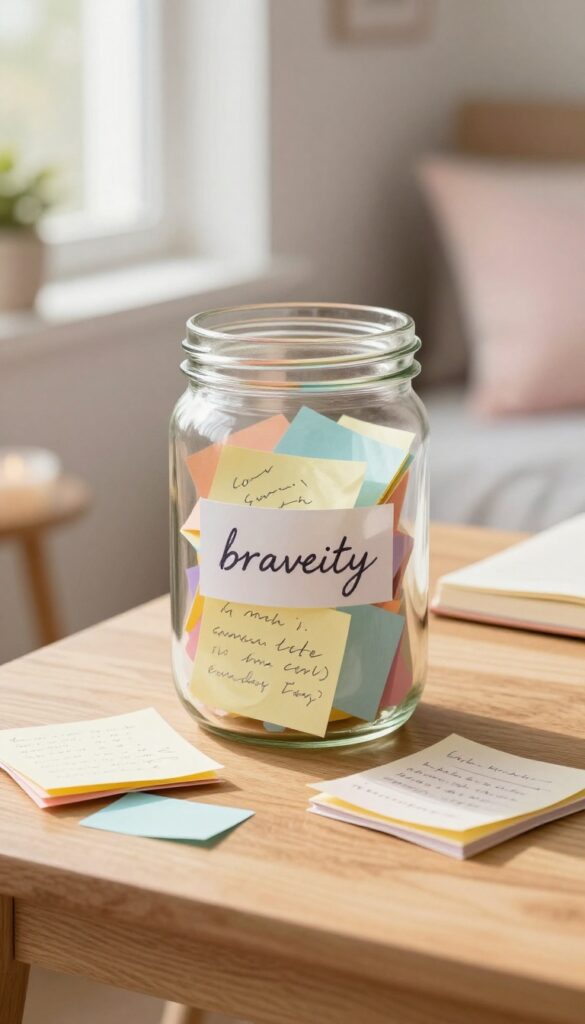
Sometimes we forget just how strong we really are. A Bravery Jar is a simple, tangible way to collect proof of your courage, big or small. Every time you face something scary—speaking up, trying something new, or just getting through a tough day—write it down and drop it in.
Over time, the jar fills with reminders that you're braver than you think.
What Goes Inside
No moment is too small. Did you make a phone call you were dreading? That's bravery.
Did you set a boundary? Absolutely. Did you get out of bed when everything felt heavy?
Yes, that counts. The goal is to capture anything that took a little guts, so you can see your courage accumulate.
When To Read Them
Keep the jar somewhere visible—on your desk, nightstand, or dresser. Whenever self-doubt creeps in or you're facing a new challenge, pull out a few slips and read them. Let the evidence of your past strength fuel your present confidence.
Make It A Ritual
Set a weekly reminder to add at least one bravery note. You can also decorate the jar with words that inspire you, like 'fearless' or 'growth. ' The more you engage with it, the more it becomes a powerful self-care tool.
10. Dress for Yourself, Not for an Audience
Your wardrobe is a daily opportunity to express who you are—not who others expect you to be. When you dress for yourself, every outfit becomes a small act of self-respect. It's not about following trends or impressing anyone; it's about wearing what makes you feel like the best version of you.
That confidence boost you get from a favorite outfit? That's real. It's a reminder that you deserve to feel good in your own skin, starting with what you put on it.
Find Your Signature Style
Instead of chasing every trend, take time to figure out what truly feels like you. Maybe it's bold colors, soft neutrals, or vintage pieces. Your signature style is the one that makes you walk a little taller.
Experiment, but always come back to what feels authentic.
Ignore The Noise
Social media, magazines, even well-meaning friends—everyone has an opinion on what you should wear. But their opinions don't live in your body. Practice tuning out the noise and listening to your own instincts.
The more you trust yourself, the easier it gets.
Comfort Is Confidence
You can't feel confident if you're constantly adjusting your clothes or worrying about how they fit. Comfort isn't about looking sloppy; it's about choosing pieces that move with you. When your body feels at ease, your mind does too.
11. Set a Daily 'No Phone' Window
Your phone is a constant source of notifications, comparisons, and noise. It's hard to hear your own thoughts when you're always scrolling. Giving yourself a daily break from the screen helps you reset and reconnect with what really matters.
Start Small
You don't have to go cold turkey. Begin with 15 minutes of phone-free time and work up to 30 or 60 minutes. Pick a time that works for you—maybe right after work or before bed.
Fill The Time Intentionally
Use that window for something that nourishes you. Read a few pages of a book, write in a journal, stretch, or just sit outside. The goal isn't to be productive—it's to be present.
Notice The Shift
After a few days, you'll likely feel calmer and more focused. Without the constant pings, your mind has space to process emotions and ideas. That clarity builds confidence from the inside out.
12. Celebrate Small Wins Out Loud

You don't need to wait for a major milestone to feel proud of yourself. In fact, the tiny victories—like finishing a task you've been putting off or speaking up in a meeting—deserve just as much recognition. When you celebrate these moments out loud, you train your brain to notice progress, which builds momentum and confidence over time.
Acknowledging your wins, no matter how small, reinforces a growth mindset. It shifts your focus from what's left to do to what you've already accomplished. This simple habit can transform how you see yourself and your abilities.
Share With A Friend
Text a close friend or family member one win from your day. It could be as simple as "I finally scheduled that doctor's appointment" or "I handled a tough conversation well. " Sharing out loud makes the win feel real and gives you a chance to receive positive reinforcement.
Keep A Win Jar
Grab a jar and some slips of paper. Each evening, write down one small victory and drop it in. Over time, you'll have a physical collection of your progress.
On low days, pull out a few notes to remind yourself how far you've come.
Post In A Private Journal
If sharing with others feels uncomfortable, start a private journal dedicated to wins. Use a notebook or a digital document. The act of writing solidifies the achievement and helps you internalize your growth.
13. Learn to Receive Compliments Gracefully
A simple "thank you" can be a powerful confidence booster. Many of us deflect praise because we don't feel we deserve it, but that habit only reinforces self-doubt. When you accept a compliment, you're training your brain to believe you're worthy of the recognition.
Receiving compliments gracefully is a skill that builds self-worth over time. Instead of brushing off kind words, pause and let them sink in. This small shift rewires your inner dialogue and helps you internalize positive feedback.
Why We Deflect
We often downplay compliments to appear humble or because we don't fully believe them. But deflecting sends a message to your brain that the praise isn't valid. Over time, this erodes confidence.
Recognizing this pattern is the first step to changing it.
The Power Of 'thank You'
A simple "thank you" acknowledges the giver and affirms your worth. It doesn't require you to agree or disagree—just accept. Practice it in low-stakes situations, like when someone compliments your outfit, and notice how it feels.
Building The Habit
Start small. Next time you receive a compliment, resist the urge to explain or deflect. Just smile and say "thank you.
" Over time, this becomes automatic, and your brain starts to believe the positive messages you're receiving.
14. Create a 'Feel-Good' Playlist

Music has a direct line to your emotions. A single song can shift your mood from sluggish to unstoppable in seconds. That's why having a go-to playlist of tracks that make you feel powerful is such a simple but effective self-care tool.
Curating a 'feel-good' playlist is about more than just picking your favorite songs. It's about intentionally choosing music that lifts your spirits, boosts your confidence, and reminds you of your strength. Think of it as your personal soundtrack for empowerment.
Choose Songs That Spark Joy
Start with tracks that make you want to dance, sing along, or just smile. These are the songs that instantly improve your mood. Don't overthink it—go with what feels good.
Add Anthems Of Empowerment
Include songs with lyrics that make you feel unstoppable. Whether it's a pop anthem, a rap verse, or a rock ballad, pick tracks that remind you of your own power and resilience.
Update It Regularly
Your playlist should evolve with you. Add new discoveries and remove songs that no longer resonate. Keeping it fresh ensures it stays a reliable mood booster.
15. Practice Gratitude for Your Body
It's easy to pick apart your appearance, but what about everything your body does for you? Gratitude shifts the focus from how you look to how you function. When you appreciate your body's abilities, self-love follows naturally.
Start a daily habit of naming three things your body did for you. Maybe it's your lungs filling with air, your legs carrying you upstairs, or your hands typing this sentence. Over time, this rewires your brain to see your body as a partner, not a project.
Start A Body Gratitude Journal
Keep a small notebook by your bed. Each night, jot down three things your body made possible. They can be simple: "My eyes let me watch the sunset" or "My stomach digested dinner without complaint.
" This practice builds a habit of appreciation.
Turn Criticism Into Curiosity
When you catch yourself judging a body part, pause and ask: "What has this part done for me today? " Your thighs might have helped you walk, your arms hugged someone. Curiosity replaces harshness with gratitude.
Thank Your Body In Real Time
While brushing your teeth, thank your hands for holding the brush. While walking, thank your feet for each step. Small acknowledgments throughout the day keep gratitude fresh and present.
16. Take a Social Media Break One Day a Week
Scrolling through perfectly curated feeds can quietly eat away at your self-esteem. A full day offline each week gives your mind a break from the comparison trap and lets you focus on what actually matters. It's not about quitting forever—just creating space to breathe.
Choose one day—maybe Sunday or a less busy weekday—and commit to staying off all social platforms. Let close contacts know so they can reach you by text or call if needed. Use that time for hobbies, nature, or simply being present with the people around you.
You'll likely notice how much mental clutter disappears, and returning online feels less urgent.
Why It Works
Social media is designed to keep you comparing—your behind-the-scenes with everyone's highlight reel. A weekly break disrupts that loop, letting your brain reset. Without constant input, you reconnect with your own thoughts and feelings, which builds genuine confidence.
How To Start
Pick a day and set a simple boundary: no apps, no browser checks. Turn off notifications or even delete the apps for that day. Replace the habit with something you enjoy—reading, walking, cooking, or journaling.
The first few times might feel weird, but soon you'll look forward to it.
17. End Your Day with a Reflection Ritual

Before you close your eyes tonight, take five minutes to ask yourself three simple questions: What went well? What did I learn? What am I grateful for?
This tiny ritual helps you process the day and recognize your own growth. It's a gentle way to build self-awareness and end on a positive note, no matter what happened.
A reflection ritual doesn't have to be long or complicated. The key is consistency. By making it a nightly habit, you train your brain to look for the good, learn from challenges, and appreciate the small wins.
Over time, this practice boosts confidence because you start seeing proof of your own progress. It also helps you let go of the day's stress, so you sleep better and wake up ready for tomorrow.
Keep It Simple
You don't need a journal or a fancy app—just a quiet moment. Ask the three questions in your head or speak them out loud. If you prefer writing, keep a small notebook by your bed.
The goal is reflection, not perfection. Even one honest answer is enough.
Focus On What You Controlled
When answering 'What went well? ', think about your own actions, not external events. Maybe you spoke up in a meeting, chose a healthy snack, or called a friend. Recognizing your own effort reinforces that you're capable and in charge of your life.
Turn Mistakes Into Lessons
For 'What did I learn? ', don't dwell on failures. Instead, ask what you'd do differently next time. This shifts your mindset from self-criticism to growth.
Every misstep becomes a stepping stone, which builds real, lasting confidence.
FAQ
How often should I practice these self-care tips?
Start with one or two that resonate most and do them daily or weekly. Consistency matters more than quantity. Over time, add more as they become habits.
Can self-care really boost confidence?
Absolutely. Self-care reinforces that you are worthy of time and attention. Each small act builds self-trust, which is the foundation of confidence.
What if I don't have time for self-care?
Self-care doesn't have to be time-consuming. Even five minutes of deep breathing or writing one affirmation can make a difference. Prioritize what fits your schedule.
How do I stay motivated to keep up with self-care?
Track your progress in a journal or share your goals with a friend. Notice how you feel after each practice—the positive feelings will motivate you to continue.
Are these tips suitable for all ages?
While tailored for teenage girls and young women, many tips are universal. Anyone looking to build confidence and personal growth can adapt them.
Conclusion
Real confidence grows from small, consistent acts of self-care. Pick two or three tips that resonate with you and weave them into your week—whether it's journaling for five minutes or saying no to one extra commitment.
Notice how these tiny shifts change the way you show up for yourself. Personal growth isn't about perfection; it's about showing up, one gentle choice at a time.