
Consistency is the secret sauce behind any real glow up, but staying motivated daily can feel like a battle. You don't need a massive overhaul or a strict 5 AM routine—just a few smart, repeatable habits that keep you showing up for yourself.
These 25 tips are designed to be practical, low-pressure, and easy to weave into your everyday life. From a quick morning reset to celebrating the smallest wins, each idea helps you build momentum without burning out.
Pick one or two to start, and let the steady progress do the rest. No perfection required, just a little daily effort that adds up.
1. Start with a 5-Minute Morning Reset

Mornings set the tone for everything that follows, but you don't need a two-hour ritual to feel grounded. A quick five-minute reset can make a huge difference in your focus and mood. Think of it as a gentle nudge to your brain that says, 'We're starting fresh. '
Keep it simple. Stretch your arms overhead, roll your shoulders, and take three deep breaths. If you're into journaling, jot down one thing you're looking forward to today.
The goal is to center yourself before the noise of the day kicks in.
Why Five Minutes Works
Five minutes is short enough to stick, but long enough to shift your mindset. It's not about perfection—it's about showing up for yourself. Even on chaotic days, you can spare five minutes to reset.
Make It Easy To Remember
Link your reset to something you already do, like after brushing your teeth or making coffee. Put a sticky note on your mirror or set a phone reminder. The easier it is, the more likely you'll do it.
Keep It Flexible
Your reset can change based on your mood. Some days you might need more stretching; other days, just a few deep breaths. The point is to have a routine that feels good, not like another chore.
2. Define Your 'Why' and Write It Down
Every glow up starts with a reason, and that reason is your anchor. When you know exactly why you want to change, the daily grind feels less like a chore and more like a choice. But here's the catch: a vague 'I want to be better' won't cut it when motivation fades.
Writing your 'why' down makes it real. It turns a fuzzy thought into a concrete reminder you can see every day. Whether it's on a sticky note, your phone wallpaper, or a journal page, that written reason becomes your compass on the days you feel lost.
Your 'why' is the fuel that keeps you going when the excitement wears off. It's not just about looking better or hitting a goal—it's about the deeper reason behind it. Maybe you want to feel more confident in your skin, set a healthy example for your kids, or prove to yourself that you can stick with something.
Whatever it is, get specific. Write it in a way that hits you emotionally. Instead of 'I want to lose weight, ' try 'I want to have the energy to play with my kids without getting winded. ' That kind of clarity makes it easier to stay committed.
Keep it somewhere you'll see it often—your bathroom mirror, your desk, or the lock screen of your phone. When you feel like skipping a workout or reaching for junk food, read it out loud. Let it remind you why you started.
Make It Specific And Emotional
A strong 'why' is personal and vivid. Avoid generic statements like 'I want to be healthier. ' Instead, dig deeper: 'I want to feel strong enough to hike that trail with my friends next summer. ' The more specific and emotional, the more it will resonate. Write it as if you're telling a friend your deepest reason for wanting this glow up.
Keep It Visible Every Day
Out of sight is out of mind, so put your 'why' where you can't miss it. Use sticky notes on your mirror, a note on your phone, or a printed card in your wallet. The goal is to see it multiple times a day.
When you're tempted to skip a habit, that visual cue can be the nudge you need to stay on track.
Revisit And Revise As You Grow
Your 'why' isn't set in stone. As you progress, your reasons might evolve. Maybe you started to lose weight, but now you're more focused on gaining strength.
That's okay. Take a few minutes each month to read what you wrote and adjust it if needed. Keeping it fresh keeps it meaningful.
3. Use a Simple Habit Tracker
Tracking your habits might sound like extra work, but it's actually the opposite. A simple tracker—whether it's a notebook, an app, or a printable—gives you a clear visual of your progress. Seeing those little boxes filled in day after day becomes its own reward.
It's not about being perfect. It's about showing up and noticing the streak you're building. That visual momentum can carry you through days when motivation runs low.
Why Streaks Work
Humans love completing things. A streak gives you a tangible goal: don't break the chain. Even on tough days, you'll find yourself doing the bare minimum just to keep the streak alive.
That's enough to keep the habit going.
Choose Your Format
Pick what feels natural. A paper calendar with X's, a bullet journal spread, or an app like Habitica or Streaks. The best tracker is the one you'll actually use.
If you're not into tech, a simple printed grid works just fine.
Keep It Ridiculously Simple
Don't track ten habits at once. Start with one or two that matter most. Each day you complete them, mark it off.
That's it. Overcomplicating the tracker defeats the purpose. Simplicity keeps you consistent.
4. Declutter One Small Area Daily
A cluttered space can quietly drain your energy, even if you don't notice it. When your desk is piled with papers or your drawer is a mess, it adds a little mental weight to your day. Clearing just one small area can lift that weight and give you a quick sense of accomplishment.
Spending 10 minutes a day decluttering isn't about perfection—it's about building a habit that keeps your environment supportive. A tidy space helps you think clearer and feel more in control, which is exactly the kind of momentum you need for a glow up. You don't have to tackle the whole house; just pick a drawer, a shelf, or a corner and give it some love.
Why It Works
When you clear clutter, you're also clearing mental fog. A small, manageable task gives you a quick win that boosts your mood and motivation. Plus, a neat environment reduces stress and makes it easier to focus on other goals.
How To Start
Pick a spot that bothers you most—maybe a messy nightstand or a cluttered counter. Set a timer for 10 minutes and just sort through things. Decide what to keep, toss, or donate.
Don't overthink it; the goal is progress, not perfection.
Keep It Going
Make it a daily habit by pairing it with something you already do, like after your morning coffee or before bed. Even a tiny tidy-up adds up over time. Before you know it, your whole space feels lighter, and so do you.
5. Move Your Body for 10 Minutes
Exercise doesn't have to be a marathon. A quick 10-minute walk, a stretch session, or a short YouTube workout can do wonders for your energy and mood. The key is to make it so easy that you can't say no.
When you move, you boost your circulation and release feel-good endorphins. That little burst of activity makes you feel accomplished and more motivated to tackle the rest of your day. It's a simple win that sets a positive tone.
The idea is to lower the barrier to exercise. By committing to just 10 minutes, you remove the excuses and make movement a non-negotiable part of your routine. You'll be surprised how often those 10 minutes turn into 20 or 30 once you get going.
Start With Something Enjoyable
Pick an activity you genuinely like, whether it's dancing to your favorite playlist, doing a quick yoga flow, or taking a brisk walk around the block. If it feels like a chore, you'll skip it. The goal is to make movement feel like a treat, not a punishment.
Use It As A Reset Button
Use your 10 minutes to clear your head and refocus. If you're feeling stuck or low on energy, a short burst of movement can snap you out of that slump. It's a mini reset that helps you return to your tasks with fresh eyes and a better mood.
Build Momentum With Consistency
Consistency beats intensity. A 10-minute daily habit is far more effective than a grueling workout you do once a week. Over time, you'll notice your stamina improving and your confidence growing.
That steady progress is what fuels your glow up.
6. Hydrate Like It's Your Job

Water is the easiest upgrade you can give yourself, yet most of us walk around slightly dehydrated without realizing it. That sluggish feeling, dry skin, and brain fog? Often just a water problem.
Treat hydration like a non-negotiable task, and your body will thank you in ways you can see and feel.
Keep a water bottle nearby and sip throughout the day. Proper hydration improves skin, energy, and focus—all essential for a glow up. Add fruit slices if plain water bores you.
Set A Daily Target
Aim for at least 8 cups, but adjust based on your activity level and climate. Use a marked bottle or a hydration app to track your intake. Small, steady sips beat chugging a liter at once.
Spice It Up Naturally
Plain water can get dull. Infuse it with lemon, cucumber, mint, or berries for a hint of flavor without added sugar. This makes reaching for your bottle more enjoyable and keeps you coming back for more.
Pair Water With Habits
Link drinking water to existing routines: one glass after waking up, one before each meal, and one before bed. This creates automatic reminders and ensures you stay consistent without extra effort.
7. Plan Your Outfits the Night Before
Mornings can be chaotic, and the last thing you want is to stare at your closet wondering what to wear. Deciding on an outfit the night before removes that stress and gives you extra time to ease into your day. Plus, when you look put-together, you feel more confident and ready to tackle whatever comes your way.
Laying out your clothes is a small habit with big payoffs. It cuts down on decision fatigue, saves time, and helps you avoid that frantic last-minute scramble. When you start your day feeling polished, it sets a positive tone that carries through everything else.
Pick A Full Look
Choose your entire outfit, including shoes, accessories, and even a backup option if the weather might change. Hang them together or place them on a chair so everything is ready to grab. This eliminates any morning guesswork and makes getting dressed feel effortless.
Check The Weather
A quick peek at tomorrow’s forecast helps you pick something appropriate and comfortable. You’ll avoid being too cold or too warm, which keeps you feeling good all day. It’s a simple step that prevents last-minute outfit changes.
Keep It Simple
You don’t need a fashion-show-level outfit every day. Stick to pieces you love and feel great in. Having a few go-to combinations can make planning easier and still leave you looking sharp.
8. Practice Positive Affirmations
The words you repeat to yourself shape how you see yourself. If your inner voice is harsh, it's hard to stay motivated. Positive affirmations are a simple way to flip that script and build real self-belief.
Positive affirmations work because they train your brain to focus on your strengths instead of your doubts. When you say 'I am capable' or 'I am worthy' regularly, you start to believe it. That belief fuels the consistency you need for a glow up.
Start Your Day With A Mirror Check
Stand in front of the mirror each morning, look yourself in the eye, and say one or two affirmations out loud. It feels awkward at first, but it sets a positive tone for the day. Keep it simple: 'I am ready for today' or 'I am enough. '
Write Them Where You'll See Them
Sticky notes on your bathroom mirror, laptop, or phone case work as gentle reminders. When you see 'I am growing every day' while brushing your teeth, it sinks in without extra effort. Swap them out weekly to keep them fresh.
Turn Doubts Into Affirmations
When a negative thought pops up, flip it into a positive statement. Instead of 'I always fail, ' say 'I learn from every attempt. ' This reframes your mindset in the moment and strengthens your resilience over time.
9. Limit Social Media Scrolling
Scrolling through perfectly curated feeds can quietly chip away at your motivation. Before you know it, you're comparing your behind-the-scenes to someone else's highlight reel. That’s a one-way ticket to feeling stuck.
Setting boundaries around social media isn't about going cold turkey—it's about taking back control. When you stop letting the algorithm dictate your mood, you free up mental space for your own goals.
Start by tracking how much time you actually spend on apps. You might be surprised. Then, set a daily limit—say, 30 minutes—and stick to it.
Use the extra time for something that moves you forward, like reading, journaling, or a quick workout.
Why Scrolling Kills Momentum
Every swipe exposes you to someone else's progress, which can trigger feelings of inadequacy. That comparison trap drains your energy and makes your own efforts feel small. Even if you don't realize it, you're absorbing pressure that wasn't yours to carry.
Set Smart Boundaries
Turn on app timers or use a focus mode during work hours. Keep your phone in another room while you tackle important tasks. You can also curate your feed—unfollow accounts that don't inspire you.
The goal is to make social media a tool, not a time-suck.
Replace Scrolling With Action
When you feel the urge to open an app, pause and ask: 'Is this helping me glow up? ' If not, redirect to a quick win—like stretching, prepping a meal, or writing down one task. Small actions build momentum, while scrolling builds nothing.
10. Create a Vision Board That Inspires
A vision board is more than just a collage of pretty pictures—it's a daily visual reminder of where you're headed. When your goals are front and center, it's easier to make choices that align with them. Whether you prefer a physical board or a digital one, the act of creating it can reignite your motivation.
Start by gathering images, quotes, and words that represent your goals and dreams. They can be anything from a dream vacation to a healthier body or a new career. Arrange them on a board or in a digital canvas in a way that feels inspiring to you.
Place it somewhere you'll see it every day—beside your mirror, above your desk, or as your phone's wallpaper. The key is to make it impossible to ignore.
Why It Works
Your brain responds to visual cues. When you see your goals regularly, they stay top of mind, which makes you more likely to act on them. It's like a gentle nudge that keeps you aligned with your intentions, even on days when motivation dips.
How To Make It Stick
Don't just create it and forget it. Spend a few moments each day looking at your board and visualizing yourself achieving those goals. Update it as your dreams evolve.
The more you engage with it, the more powerful it becomes.
11. Celebrate Small Wins

Big goals can feel miles away, and that distance often kills momentum. But you don't need to wait for a major milestone to feel good about yourself. Every little step forward is worth acknowledging—it's proof that you're showing up for yourself.
When you celebrate small wins, you train your brain to notice progress. That positive reinforcement releases dopamine, the feel-good chemical that keeps you going. It turns a dull routine into a game where you're constantly leveling up.
Make It Tangible
Keep a simple checklist or a jar where you drop a coin for each win. Seeing your progress pile up is satisfying and makes your effort real. It's not about the prize—it's about the visual reminder that you're moving forward.
Pair It With A Treat
Link a small reward to your win, like a favorite snack or a short break. This creates a positive loop that makes you want to repeat the behavior. Just keep the treat small so it doesn't undo your progress.
Share It With Someone
Tell a friend or post in a community. Sharing your win makes it more meaningful and holds you accountable. Plus, you might inspire someone else to celebrate their own small victories.
12. Get Enough Sleep
Sleep is the ultimate glow-up hack, yet it's often the first thing we sacrifice. When you're tired, every task feels heavier, and your willpower drops. Prioritizing rest isn't lazy—it's a strategic move for your energy, skin, and mood.
Aim for 7-9 hours of quality sleep each night. This isn't just about feeling rested; it's about giving your body time to repair and reset. When you're well-rested, you're more patient, focused, and motivated to stick to your routine.
Set A Consistent Sleep Schedule
Go to bed and wake up at the same time every day, even on weekends. This regulates your internal clock, making it easier to fall asleep and wake up naturally. Consistency here builds a solid foundation for your daily glow-up habits.
Create A Wind-down Routine
An hour before bed, dim the lights, put away screens, and do something calming—like reading or stretching. This signals your brain that it's time to slow down. A simple ritual can make falling asleep feel effortless.
Optimize Your Sleep Environment
Keep your bedroom cool, dark, and quiet. Invest in blackout curtains or a white noise machine if needed. Your bed should be a sanctuary for sleep, not a workspace or entertainment center.
13. Eat One Healthy Meal a Day
Changing your entire diet overnight is a recipe for burnout. Instead of trying to be perfect, just focus on making one meal a day genuinely nutritious. That could mean adding a handful of spinach to your pasta or swapping white rice for quinoa.
Small, consistent choices like these build a healthier relationship with food without the pressure.
The goal here is progress, not perfection. When you commit to one healthy meal a day, you remove the stress of overhauling everything at once. You also give yourself a daily win that fuels your motivation to keep going.
Over time, this simple habit becomes second nature, and you'll likely find yourself making healthier choices at other meals too.
Start With What You Already Like
Pick a meal you already enjoy and find simple ways to upgrade it. Love your morning eggs? Add some bell peppers and a side of avocado.
Enjoy your lunchtime sandwich? Swap the white bread for whole grain and load up on veggies. By starting with familiar foods, you're more likely to stick with it.
Prep Just A Few Ingredients
You don't need to spend hours meal-prepping. Just wash and chop a few veggies or cook a batch of grains ahead of time. Having these ready makes it easy to throw together a healthy meal even on busy days.
A little prep goes a long way in keeping your healthy meal plan realistic.
Let One Win Lead To Another
Once you've nailed that one healthy meal, you'll naturally feel more inclined to make better choices later. It's a positive ripple effect. Instead of feeling restricted, you'll feel empowered by the small victories.
That momentum can carry you through the rest of the day and into tomorrow.
14. Take a Break from Negativity
Negativity is like a slow leak in your motivation tank. Constant exposure to bad news, toxic people, or your own harsh inner critic can drain your energy before you even start. You might not notice it right away, but over time it chips away at your glow-up momentum.
Stepping away from negativity isn't about ignoring reality—it's about protecting your mental space. When you curate your environment to be uplifting, you give yourself a fighting chance to stay consistent. Your mind deserves the same care as your skin or your workout routine.
Audit Your Inputs
Take a quick look at what you consume daily. Unfollow accounts that make you feel inadequate, mute news alerts that spike anxiety, and limit time with people who drain you. Replace those inputs with content that inspires or educates.
It's not about living in a bubble—it's about choosing what fills your head.
Create A Positive Space
Your physical environment affects your mood more than you think. Add a plant, change your phone wallpaper to a motivational quote, or keep a gratitude journal on your desk. Small tweaks make your space feel like a sanctuary, not a battleground.
When your surroundings support you, staying consistent feels easier.
Silence The Inner Critic
Self-criticism is a form of negativity that follows you everywhere. Catch yourself when you think 'I'm not good enough' and swap it for a kinder, realistic thought. Treat yourself like you'd treat a friend—encouraging, not harsh.
This simple shift lowers stress and keeps you moving forward.
15. Learn Something New

Your brain craves novelty, and picking up a new skill is one of the best ways to keep your glow-up exciting. Whether it's a language, a recipe, or a craft, learning something fresh gives you a sense of progress that spills into other areas of your life. It's a fun, low-pressure way to stay engaged with yourself.
Learning doesn't have to mean formal classes or expensive courses. It can be as simple as watching a tutorial, reading a book, or trying a new hobby. The key is to choose something that genuinely interests you, not what you think you should learn.
When you enjoy the process, consistency comes naturally.
Pick Something You Actually Like
Don't force yourself to learn something just because it looks good on a resume. Think about what sparks your curiosity—maybe it's pottery, coding, or a new language. When you're genuinely interested, you'll look forward to your practice sessions instead of dreading them.
Start Small And Build Momentum
You don't need to spend hours every day. Even 15 minutes of focused learning can make a difference. Break your goal into tiny steps: learn one new word, one chord, or one technique.
Small wins keep you motivated and make the habit stick.
Celebrate Your Progress
Track how far you've come, whether it's a journal, a checklist, or a simple note on your phone. Acknowledge every milestone, no matter how small. That positive reinforcement boosts your confidence and reminds you that you're capable of growth.
16. Set a Weekly Review Session
Sundays often get a bad rap for being the end of the weekend, but they're actually the perfect launchpad for the week ahead. A quick weekly review isn't about beating yourself up over what you didn't do—it's about resetting your compass. Taking 15 minutes to look back helps you see patterns, celebrate wins, and tweak your plan so you're not just spinning your wheels.
A weekly review is your personal debrief. It's a chance to ask, "What worked? What didn't?
" and then adjust accordingly. This simple habit keeps your glow-up aligned with your real life, not a fantasy schedule. When you know exactly what's working, you can double down on it.
When something's not, you can let it go without guilt. That's how you stay consistent without white-knuckling it.
How To Do A Quick Weekly Review
Block out 15 minutes every Sunday. Grab a notebook or open a notes app. Write down three wins from the week, no matter how small.
Then list one thing that drained your energy and one thing that boosted it. Finally, pick one small adjustment for next week. That's it—no need to overcomplicate it.
What To Ask Yourself
Keep your questions simple and forward-focused. Did I move closer to my goals? What felt easy, and what felt like a struggle?
What can I do differently next week? These aren't judgment calls—they're just data points. The goal is to learn, not to criticize.
Turn Insights Into Action
The real magic happens when you act on what you learn. If you noticed you're more energized in the morning, move your workout there. If a certain task keeps getting skipped, break it into smaller steps.
Your review only works if you use it to tweak your plan. That way, each week gets a little better than the last.
17. Surround Yourself with Supportive People
Who you spend time with can quietly shape how you feel about your goals. If the people around you constantly doubt or dismiss your efforts, staying consistent gets a whole lot harder. On the flip side, a few encouraging voices can make all the difference.
Supportive friends and family don't just cheer you on—they hold you accountable in a gentle way. When you know someone believes in you, showing up for yourself feels less like a chore and more like a shared win. That sense of connection keeps motivation alive on days when your own drive runs low.
Building a support network isn't about cutting people off or forcing everyone to join your routine. It's about intentionally spending more time with those who lift you up and less with those who drain you. Start small: text a friend after a workout, share your weekly wins, or ask someone to check in on your progress.
Over time, these little interactions create a buffer against burnout and make the journey feel lighter. If your inner circle isn't as supportive as you'd like, look for communities online or in person that share your interests. Fitness classes, book clubs, or even niche Facebook groups can become your cheerleading squad.
The key is to find people who get what you're trying to do and genuinely want to see you succeed.
Find Your People
Look for groups that align with your goals—whether it's a local running club, a wellness forum, or a study group. Being around people who are working toward similar things creates a natural sense of camaraderie. You'll pick up tips, share struggles, and celebrate each other's progress, which makes consistency feel more like a team effort.
Set Up Accountability
Ask a friend to be your accountability partner. Check in with each other a few times a week, share your intentions, and follow up on how things went. Knowing someone expects to hear from you can be just enough push to stay on track.
Keep it simple—a quick text or a short call works perfectly.
Limit The Naysayers
You don't have to cut ties, but you can set boundaries. Spend less time discussing your goals with people who consistently bring you down. Politely change the subject or keep your plans to yourself around them.
Protecting your motivation is not selfish—it's necessary for your growth.
18. Reward Yourself for Milestones
Let’s be real—glow-ups take work, and sometimes the grind can feel endless. That’s where rewards come in. Setting up small treats for hitting your goals gives you something to look forward to, making the journey feel a lot less like a chore.
It’s not about bribing yourself; it’s about acknowledging your effort and reinforcing the habits you’re building.
When you reward yourself for milestones, you’re training your brain to associate progress with positive feelings. This makes it easier to stay consistent because you’re not just waiting for some distant end result—you’re getting little wins along the way. The key is to choose rewards that feel special but don’t derail your progress.
A movie night, a new book, or a spa day are all great options that give you a break without undoing your hard work.
Start Small And Specific
Pick a milestone that’s realistic and measurable, like sticking to your routine for a week or finishing a workout plan. Then, decide on a reward that matches the effort. For a small win, maybe a favorite coffee or a relaxing bath.
For a bigger milestone, plan something more substantial, like a weekend trip or a new outfit. The more specific you are, the more motivating it feels.
Make It Meaningful, Not Just Material
Rewards don’t have to cost money. Think about what truly makes you happy—like an afternoon off, a hike in nature, or a guilt-free nap. The point is to celebrate your achievement in a way that aligns with your values and self-care.
When the reward feels personal, it’s more effective than a generic treat.
Keep It Guilt-free
Some people worry that rewarding themselves might undo their progress, but that’s not true if you choose wisely. A movie night won’t ruin your fitness goals, and a new book won’t break your budget. The key is to avoid rewards that directly contradict your goals, like binge-eating junk food if you’re working on health.
Instead, pick something that supports your overall well-being.
19. Practice Gratitude Daily
When you're chasing a glow up, it's easy to fixate on everything that's still a work in progress. But that tunnel vision can drain your energy fast. Gratitude flips the script, reminding you of what's already going well.
It's a simple habit that quietly builds a more positive, motivated mindset.
Start each day by writing down three things you're grateful for. They can be as small as a good cup of coffee or as big as a supportive friend. The act of putting them on paper trains your brain to notice the good stuff.
Over time, this shift in focus makes it easier to stay consistent because you're not constantly running on empty.
The Science Behind Gratitude
Gratitude isn't just a fluffy concept—it has real effects on your brain. Studies show that regular gratitude practice can increase dopamine and serotonin, the feel-good chemicals that boost mood and motivation. When you feel better, you're more likely to keep up with your goals.
How To Make It Stick
Keep it simple. Use a dedicated notebook or a notes app on your phone. Pick a consistent time, like right after brushing your teeth or before bed.
The key is to be specific—instead of 'my family, ' try 'my sister's laugh when we watched that movie. ' Specificity makes the gratitude feel more real.
Turn Gratitude Into A Morning Ritual
Pair your gratitude list with your morning coffee or your commute. It only takes two minutes, but it sets a positive tone for the day. If you're not a morning person, do it at night instead.
The goal is to make it a non-negotiable part of your routine, just like brushing your teeth.
20. Use Visual Reminders
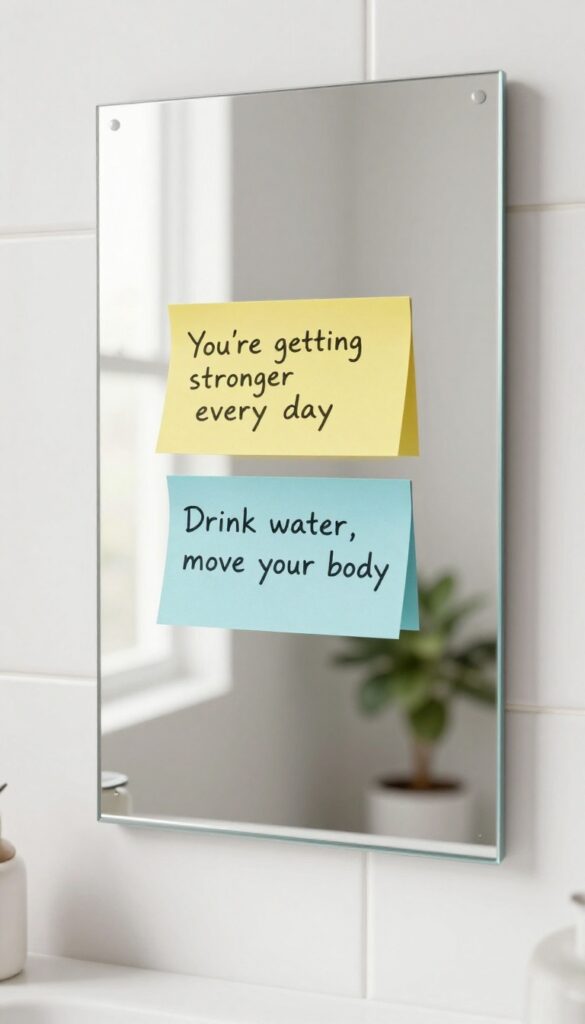
Sometimes your brain just needs a nudge to remember what you're working toward. Visual reminders act like little anchors that keep your goals in sight, even when motivation dips. They're simple to set up and can make a surprising difference in your daily consistency.
Place sticky notes with affirmations or your top goal on your bathroom mirror, set a screensaver with your vision board, or wear a bracelet that symbolizes your commitment. These cues pop up throughout the day, reinforcing your intention without you having to think about it. The key is to put them where you'll actually see them—where you brush your teeth, check your phone, or grab your keys.
Mirror Notes That Stick
Write one or two powerful phrases like 'You're getting stronger every day' or 'Drink water, move your body' on sticky notes and place them at eye level on your mirror. You'll catch them every morning and night, which is a perfect moment to reset your focus.
Digital Cues That Work
Set your phone wallpaper to a motivational quote or a picture of your dream outfit. You'll see it dozens of times a day, each glance a tiny reminder to stay on track. You can also schedule a daily notification with a positive message.
Wearable Commitment
A simple band, ring, or even a hair tie can act as a physical reminder. Every time you notice it, take a deep breath and ask yourself: 'Am I making a choice that aligns with my glow up? ' It's a subtle but powerful check-in.
21. Break Big Goals into Tiny Steps
Big goals can feel like mountains, and that's exactly why so many glow-up plans die on day one. The trick is to shrink them down until they feel almost silly to skip. Tiny steps are less intimidating and easier to accomplish, building momentum without overwhelm.
When you break a big goal into tiny steps, you remove the mental barrier that keeps you from starting. Instead of 'get fit, ' aim for 'walk 10 minutes today. ' Instead of 'write a book, ' commit to 'write one sentence. ' Each small win triggers a sense of progress, which fuels your motivation for the next step. Over time, these micro-actions compound into massive results.
Start With A Two-minute Version
If a task feels heavy, scale it down to a two-minute version. Want to declutter your room? Just put one thing away.
Want to meditate? Sit for two minutes. The goal is to lower the barrier so you actually show up.
Once you start, it's easy to keep going.
Use A Step-by-step Checklist
Write down the tiny steps in order, and check them off one by one. Visual progress feels satisfying and keeps you focused. For example, if your goal is to eat healthier, your checklist might include 'drink a glass of water' and 'add one vegetable to lunch. ' Each checkmark is a little victory.
Celebrate Every Micro-win
Don't wait for the final result to feel proud. Give yourself credit for each tiny step you complete. A quick mental 'nice' or a small treat reinforces the habit.
This positive feedback loop makes you want to repeat the behavior, so you stay consistent without relying on sheer willpower.
22. Forgive Yourself on Off Days
Nobody stays on track 100% of the time, and that’s okay. The moment you miss a workout or eat the entire pizza, your brain might scream, "Well, you ruined it, so why bother? " That’s the real enemy—not the slip-up itself.
Self-forgiveness is a skill, and it’s also a secret weapon for long-term consistency. When you let go of guilt and shame, you free up mental energy to get back on the wagon. Tomorrow is a fresh chance, and you don’t need to earn it by beating yourself up today.
The way you talk to yourself after a mistake can either make or break your momentum. If you respond with harsh criticism, you’re more likely to spiral and quit altogether. But if you respond with kindness, you’ll bounce back faster and stay motivated.
Treat yourself like you’d treat a friend who’s having a rough day. You wouldn’t tell them they’re a failure for missing one workout. You’d remind them that it’s just one day and they can start again tomorrow.
That’s the exact same compassion you deserve. Remember, consistency isn’t about being perfect. It’s about showing up most of the time and not letting the occasional miss derail your progress.
A single off day doesn’t erase all the work you’ve put in. It’s just a bump in the road, not the end of the journey.
Reframe The Mistake
When you slip up, take a minute to look at the bigger picture. Ask yourself: "What can I learn from this? " Maybe you skipped a workout because you were exhausted—so plan to go to bed earlier next time.
Turning a mistake into a lesson makes it useful instead of just painful.
Set A Restart Trigger
Create a simple ritual that signals a fresh start. It could be as easy as drinking a glass of water, taking a shower, or writing down one positive intention for the next day. This small action helps your brain switch from "I failed" to "I’m back on track.
"
Focus On The Next Step
Instead of dwelling on what went wrong, zero in on the very next action you can take. That might be prepping a healthy breakfast, laying out your gym clothes, or just going for a short walk. Forward motion, no matter how tiny, rebuilds your confidence and momentum.
23. Create a Playlist That Energizes You
Music has a direct line to your mood. A few upbeat tracks can turn a sluggish morning into a productive one. That's why having a go-to playlist of energizing songs is a simple yet powerful tool for staying consistent.
You don't need a fancy setup—just your phone and a few minutes to curate. The right songs can shift your mindset, boost your motivation, and make the daily grind feel lighter.
When you're feeling low on motivation, pressing play on a carefully chosen playlist can be the nudge you need. It's not about the genre; it's about the feeling. Songs with a fast tempo, empowering lyrics, or a strong beat can trigger a positive emotional response, making it easier to get started.
Think of your playlist as a personal pump-up ritual. You can use it before a workout, a work session, or any task that feels daunting. Over time, your brain will associate those songs with action, making the transition from 'meh' to 'motivated' almost automatic.
How To Build Your Energizing Playlist
Start by listing songs that have historically made you feel happy or powerful. They don't have to be mainstream hits—whatever resonates with you works. Aim for a mix of tempos, from fast-paced anthems to slightly slower but still uplifting tracks.
Keep it to 15-20 songs so you don't get overwhelmed. Update it regularly to keep it fresh.
When To Use Your Playlist For Maximum Effect
Use it strategically. Play it during your morning routine to set a positive tone, or right before a challenging task. If you're feeling a mid-day slump, a quick 5-minute listening break can reset your energy.
The key is to use it consistently so it becomes a cue for focus and action.
24. Invest in Self-Care Rituals
Self-care often gets pushed aside when you're busy chasing goals, but it's actually the fuel that keeps your glow up going. Taking time to recharge isn't a luxury—it's a necessity for staying consistent. When you feel good, showing up for yourself becomes much easier.
Carving out small moments of self-care each day can reset your energy and mood. It doesn't have to be elaborate; even a few minutes of intentional relaxation makes a difference. These rituals help you reconnect with yourself and prevent burnout, so you can keep moving forward.
Start With A Simple Morning Ritual
A short morning routine—like stretching, journaling, or enjoying a quiet cup of tea—sets a positive tone for the day. It doesn't need to be long; just a few minutes of doing something for yourself can boost your mindset. This small anchor makes it easier to stay on track with your other goals.
Schedule An Evening Wind-down
End your day by unwinding with a calming activity, such as a warm bath, a face mask, or reading a few pages of a book. This signals to your brain that it's time to relax, improving sleep quality. Better rest means more energy for tomorrow's glow-up tasks.
Make It A Non-negotiable Appointment
Treat your self-care time like an important meeting—put it in your calendar and protect it. When you prioritize these moments, you're telling yourself that you matter. This consistency builds self-respect and keeps your motivation strong.
25. Remember That Consistency Beats Perfection

There's a quiet pressure to get everything right, especially when you're trying to level up. But that pressure often backfires, making you freeze instead of move. The truth is, the person who shows up imperfectly every day will outpace the one waiting for the perfect moment.
When you let go of perfection, you give yourself room to actually start. And starting, even messy, is what builds momentum. Over time, those small, imperfect steps compound into real change—the kind that sticks.
Why Perfectionism Kills Momentum
Perfectionism is just fear in disguise. It tells you that if you can't do it flawlessly, you shouldn't do it at all. That mindset leads to procrastination and guilt, not progress.
When you aim for 'good enough, ' you keep moving, and movement is what matters.
How To Show Up On The Hard Days
On days when you're tired or unmotivated, shrink the goal. Do five minutes instead of an hour, one rep instead of a full workout, or just write one sentence. The point is to keep the streak alive.
That tiny action sends a signal to your brain that you're still in the game.
Track Progress, Not Perfection
Instead of judging each day as pass or fail, look at the bigger picture. A missed workout here or a junk food meal there won't derail you. What matters is the trend.
Keep a simple log of your daily wins, and you'll see how far you've come—even on the imperfect days.
FAQ
How can I stay motivated when I don't see results immediately?
Focus on the process, not just the outcome. Track your small wins and remind yourself that change takes time. Consistency is about showing up, not perfection.
What if I miss a day or two?
Don't beat yourself up. Missing a day is normal. The key is to get back on track as soon as possible.
One slip doesn't erase your progress.
Do I need to spend money to have a glow up?
No, many glow up habits are free or low-cost, like drinking water, walking, journaling, and getting enough sleep. It's about consistency, not expense.
How long does it take to see a glow up?
It varies, but with consistent effort, you may notice changes in a few weeks. Deeper changes, like mindset shifts, can take a few months. Be patient.
Can I do all 25 tips at once?
It's better to start with a few that resonate and gradually add more. Trying to do everything at once can lead to burnout. Build sustainable habits one at a time.
Conclusion
Consistency is the secret sauce, but you don't need to overhaul everything at once. Pick two or three tips that genuinely excite you and weave them into your daily routine. Small, repeated actions build momentum, and soon you'll notice the shift in your energy and confidence.
Be patient with yourself; some days will be easier than others. The goal isn't perfection—it's showing up for yourself in small ways that add up. Start today, keep it simple, and let your glow-up unfold naturally.